The largest college scholarship amounts awarded to students are generally academic scholarships. In light of the that, having your students do whatever they can to increase their academic scholarship is a worthy goal. In addition to college scholarships, there are often additional grants, programs and events that come with funds for college. Below are a few suggestions to consider in order to make college affordable.
Convincing your students to be intentional about test prep is not as easy as it sounds. Studying beforehand and being rested and refreshed the morning of the test is very important. Earning top scholarship dollars for college while in high school, however, will enable students to attend the college of their choice, graduating with little to no student debt. Unfortunately many high school students want to enjoy the high school experience without being bothered with thinking about (much less preparing for) college. As nice as that may sound (to the student), the reality is that the students who plan and prepare during high school are the ones who can afford their college of choice, making the college experience more affordable and enjoyable.
Most colleges grant academic scholarships based on the highest test score earned prior to a student being enrolled at the college. Even if the last test taken was a lower score than a previous test, colleges will usually award the scholarship based on the highest score earned. (You will see the words “generally,” “usually,” and “often” because this information may vary with each college.)
Some colleges super score college exams which means they will take the highest score earned in each section across numerous test dates. This is beneficial to students who take these tests multiple times, but not all colleges super score and those that do may only super score one of the college exams and not the others. Hopefully, if your students are looking for scholarships then they have also narrowed their top college choices. Find out which exams, if any, the college super scores because it might be to your students’ advantage to take that particular exam multiple times.
If you are not aware, there is now a third college exam in addition to the ACT and the SAT that is accepted by more than 140 colleges. Most of the colleges accepting this test for admission, as well as for scholarship awards, are Christian colleges, but not all. This exam is the CLT (Classic Learning Test). For more about testing, check out this article.
The best way to prepare your students to earn academic scholarships is to provide opportunities for the students to test at an early age. The PSAT can be taken years before the junior year (which is the year this test determines National Merit Scholars). CLT has a CLT8 and a CLT10 that students can take for free, from home. The CLT10 comes with scholarship potential as well. Students can take multiple practice tests for free on-line or on paper (via books that give test prep information while providing practice tests). Once students reach the 11th grade they should take at least 2 of the college exams (and taking all 3 may offer even more advantage). Some students prefer one test over the others, earning higher scores as a result. Encourage your students to take each exam at least one time in order to find their best option.
Spending money on test prep materials often brings a great ROI (return on investment). 36 University is an affordable on-line prep for the ACT. The cost is $15 but when registering, if the code “bryan” is used then the student saves $3 per month. There is no contract or number of months required for enrollment. Another prep many students use is College Prep Genius. The founder of College Prep Genius, Jean Burk, has children who threw away bags filled with full scholarship offers. She is a great resource and often speaks at educational (and homeschool) conventions. Regardless of which college exam the student decides to take multiple times, prepping for any of these tests will more than likely increase scores on any of the exams. In other words, prepping for the ACT may very well enable the student do better on the SAT and the CLT. This article will provide more information on scholarships, including links to independent scholarship opportunities. And this article includes a list of independent scholarships. Word of advice, if you apply for outside scholarships then set up a new and separate email address because you will be bombarded with emails.
Another way to increase scholarship awards is to attend scholarship events when offered. Not all colleges sponsor these events, but when they do it is well worth finding out the criteria for qualification, deadlines, expectations, and all applicable details. Bryan College hosts a scholarship event each semester for seniors who have been accepted to Bryan who have scored a minimum ACT 21 (or comparable SAT or CLT). The event is free and each student who attends will receive anywhere from $500 (minimum) to a full ride. Opportunities such as these are ones your students will not want to miss.
Qualifying for scholarships that stack will increase award amounts as well. Find out which scholarships are offered by the colleges your students are considering so that they can be awarded every scholarship for which they qualify. Be aware that academic and athletic scholarships do not stack at all colleges. If a student accepts an athletic scholarship and then gets injured, he/she might lose the scholarship. On the other hand, if an athlete chooses the academic scholarship over the athletic scholarship and he/she does not maintain the required GPA then that scholarship will be lost. If you decide to attend a college where scholarships do not stack, start talking with your students regarding their priorities in college. A thoughtful decision on priorities will help determine which scholarship opportunities to take.
Another way for your students to earn additional college funds is to make sure they qualify for state funding opportunities if they plan to attend college in their state of residence. Students in Tennessee have the ability to qualify for multiple state grants, but in order to do that they must be aware of the requirements for each grant in time to qualify. Homeschooled students often have additional requirements than students enrolled in pubic or private schools so if you homeschool your students, be sure you are aware of the qualifications.
Make sure you fill out the FAFSA in October of the student’s senior year. Many times scholarship money is first come, first serve so being in the pool as soon as possible is a definite advantage. If your student is a senior and you have not done this, do it soon!
Many colleges also have work study programs, providing work for students with financial need so that they can earn money working on campus each semester. Also, after the completion of the freshman year, colleges often offer scholarships for ambassadors, resident assistants, and additional positions not open to freshmen. In addition to these programs there may be opportunities to join leadership programs or academies that come with scholarship potential. Your students should spend time looking at the opportunities of each college they are interested attending. Having discussions with admission counselors and financial aid counselors is advised as well.
Unless your student is already a senior in high school, do not wait until the senior year to begin planning for college. No one likes debt so the sooner you and your students plan and prepare, the better! If your student is a senior, there is still much that can be done to make college affordable. Be sure you find out from the student’s top college choices which programs and events are time sensitive so that you do not miss out on any opportunities for increased funding.
Students are inclined to make a final college choice based on finances. How much will be awarded and how much debt, if any, will be incurred. That decision may be impacted by colleges with additional opportunities that, in turn justifies a higher expense (or more debt). For instance, students who attend Bryan College after high school that graduate with a 3.5 GPA can then earn their masters degree tuition free. That’s a huge advantage and one that will end up saving a student a lot of money. Every college is similar in many ways, but no two are exactly alike so be sure to find out everything you can about the colleges your students are pursuing.
Planning and preparing for college with intention can make the experience much more affordable and stress-free (okay, maybe not stress-free, but less stressful) than you can imagine!
After homeschooling my nine kiddos for 32+ years, one of my regrets is not getting involved with a speech and debate club until my 5th child was in high school. We homeschooled co-op style, using unit studies, and we required our children to give presentations weekly and, as a consequence, my children developed public speaking skills. My oldest daughter even won a state-wide speech contest in high school and received a $1,500 scholarship. But debate? We didn’t include debate until a Christian, homeschool speech and debate conference came to our town and I attended a session on the importance of teaching debate skills.
Prior to this, several of my friends had traveled out-of-town to attend one of these conferences and, upon their return, they would say, “Pat, you need to get to one of these conferences.” I should have listened to them. But I didn’t. Finally, the conference came to our town and I signed up to attend along with the oldest child at home at that time. To say that I was blown away would be an under-statement. When I attended the workshop for parents I quickly became convinced that this was something we had to add to our children’s educational experience. I found out the students would learn how to:
Debate both sides of certain issues
Research reliable information in order to defend a position
Spot false logic (and not use it),
Follow the “flow” of the debate
Be comfortable wearing business attire
Be respectful, humble, and kind
Be students with integrity
That’s a short list. Students gain so much more during their involvement with speech and debate. What they learn about current events, history, politics, government, the world around them, and more cannot compare to textbook learning. The ability to begin, carry and hold conversations regarding important issues is a huge benefit (and a skill not often seen honed by teens).
There are several Christian homeschool debate leagues and clubs. Some homeschoolers choose which league to compete with yearly depending on the speech opportunities and the debate resolutions (those change each year to a certain extent). Other students choose a league (and a club) and stick with it throughout high school. And, there are students who compete in multiple leagues. The top homeschool leagues are STOA, the NCFCA, and ICCI.
During the fall teams study, prepare, practice and attend practice tournaments. In the winter they begin seriously competing at events. By the spring the top notch students have qualified for nationals and then in late spring, or early summer, they compete at a national event.
If you have never been involved in speech and debate then I would highly recommend you either visit a club or volunteer to be a community judge at a tournament (or both)! If you live in an area where there are no clubs near by, it may be worth traveling to find out more so that you can start your own club. Becoming a part of a speech and debate club became a non-negotiable parental mandate in our home. As mentioned above, I did not not require my children compete unless they wanted to, but if had to do it over, I would probably make competition a requirement, at least for one year. (And, from what I hear, most students who compete, rarely discontinue competing.)
Look up the speech and debate leagues mentioned above and check to see if there is a club close to you. Consider traveling out of town, if necessary, to be a community judge at a competition. If that doesn’t convince you to have your students join the speech and debate world, I don’t know what will!
Scholarships are the best way to make college affordable! The largest scholarships are generally the academic scholarships which are determined by GPAs and test scores received from college exams such as the ACT, the SAT and now the CLT. Being awarded multiple scholarships is an opportunity for high school students to make college affordable without the stress of having to take out huge loans or requiring students to work several jobs while in college. Below are links to independent scholarship opportunities as well as articles that are subject appropriate.
Raising Scores to Earn More Money: When students take college exams seriously then raising their scores in order to earn higher scholarship amounts is a goal that can be reached. Take early tests such as the PSAT and the CLT10 because they come with scholarship potential (and, generally, the more times a student takes a test the more relaxed they will be and they will perform better)! There are multiple free tutorials on-line as well as practice tests available. Two programs that many homeschooling families use are 36 University (register with the code word Bryan and save $3 per month, reducing the price from $15 to $12) and College Prep Genius. Many families have found it worthwhile to invest in preparing their students for these tests by hiring private tutors, or by taking part in test prep classes.
There are several types of scholarships, as follows:
State
Federal
College
Independent
State Grants: Before (or when) your students enter high school, research the grants and scholarships offered by the state in which you live and compare them to the scholarships and grants in the state where the college is located that your students may want to attend (if outside of your state of residence). These scholarships are based on test scores, GPA and/or community service. Students will usually only qualify for state money if they have been a resident of that state during the students’ senior year (or for a year prior to attending college). For some, moving to the state where a college is located in order to qualify as in-state residents and to receive state grants is worth relocating! Knowing ahead of time what is offered will give families time to jump through required hoops or to make a move! We moved back from Florida to Tennessee before my 7th child’s senior year so he would qualify for scholarships specific to the county and to the state. (Bryan College offers a large scholarship to local seniors who attend Bryan and when we coupled that with state and federal grants his tuition was covered.)
Federal Grants: Every student (and their parents) should fill out the FAFSA in October of the senior year. The amount of money a student is eligible for is determined by the EFC (expected family contribution). Some money is limited and distributed on a first-come-first-serve basis so filling out the FAFSA as soon as possible is advised.
College Scholarships: Almost every college offers a variety of scholarships. Some stack and some do not. Research the scholarship possibilities at the top colleges of your choice to find out what your students might be able to receive. At some colleges the academic and athletic scholarships do not stack. A word of advice: If your student can earn an equal amount with an academic scholarship as with an athletic scholarship, take the academic scholarship. Athletes get injured or dropped from the team and there goes the scholarship. At Bryan College the athletic and academic scholarships stack so students do not have to choose between the two. You might be surprised at some of the scholarships offered by colleges. Because Bryan College is a Christian college, they offer scholarships for students whose parents are in full time ministry. In addition there are scholarships for children of alumni, homeschooled students, and more. Bryan also has a full tuition scholarship for students living in Tennessee whose parents make less than $35,000 a year. Bryan College has scholarships related to music, theater, martial arts, the honors program and more! This is another reason to have your top college choices narrowed down, in order to compare apples with apples once you are familiar with the scholarship possibilities from each school.
Work Scholarships: Many businesses will reward high school students with financial aid for college. If a student is going to have a steady job during high school then finding a company that will help with college would be a bonus. In the past I have heard that Chic fil A, Publix and UPS have such programs, but I have not confirmed that information. If you know of businesses that do this, send me a message or comment on this post!
Independent college scholarships: Before you even begin applying for independent scholarships, set up a separate email address. Why? Because you will be bombarded with emails and offers and your contact information will be shared with other organizations. Is it worth applying for independent scholarships? Absolutely! Every little bit helps. Below are links to get started, but be sure to research your area for local scholarship opportunities that might not be offered anywhere else. Ask friends and family members if they are aware of any local businesses that offer scholarships. It may take some time and effort, but the payoff could be huge. And this article includes a list of independent scholarships. Below is a list of additional links as well as some articles to consider.
Added Bonuses: Check with the colleges you are considering to see if they have any offers unique to their schools. Bryan College offers students the possibility of earning a tuition free Masters Degree if they come to Bryan after high school and graduate with a 3.5 GPA.
By the junior year in high school students should have a few top choice colleges in mind so that they will be aware of scholarship potential, both from the college as well as the state where the college is located (assuming they will reside there during their senior year). It is okay to apply to several colleges so that one can better compare the offers that come from the financial aid departments. Remember to ask about any specific scholarship opportunities available to seniors. Pursing each and every opportunity available could pay off big time. As we tell our children, “Work hard and sling mud because some of it is bound to stick.” Go get ’em!
Previously I wrote a blog post on preparing your students for college. Some students are convinced that they are not going to attend college when, in fact, they discover later that college is, in fact, needed for the career they plan to pursue. This is one of many mistakes students make that could easily be avoided. Read on in order to avoid the mistakes made by Christian homeschooling parents and their high school students. This post addresses students who attend a four year college. In general, attending a community college lessens both the preparation needed for admission as well as the need for top scholarship dollars.
Mistake #1: Not preparing for college. It is better to be prepared and not need college then to find out your students do need/want to go to college and they missed out on opportunities and experiences that would have made the transition to college easier and more affordable.
Mistake #2: Waiting until the senior year (or the summer after) to begin choosing a college. Discovering 2 or 3 colleges of choice should be done before the senior year so that students can take every advantage afforded them as prospective students. It is recommended that they visit the campuses and ask pertinent questions in order to find out what all needs to be completed in order to be accepted at the top colleges of their choice. Yes, I put colleges – plural. It is not unusual to apply to several colleges in order to receive financial aid packages, allowing you to compare apples with apples. Also, it is important to find out which college exams each college accepts, if they want to the writing portion included, if dual enrollment hours will transfer, and/or if the college accepts CLEP or AP credit.
Mistake #3: Not allowing students to be invested. Homeschooling parents are notorious for being over-involved in their students’ lives (been there, done that). I understand, but the more ownership your students take towards their future, the better things will go! On the other hand, if your child is apathetic and you know at some point he will regret that, do what you can to encourage him to be pro-active about his future! I often teach workshops on preparing for college and I encourage parents to bring their teens to the workshops with them. The more teens are aware of the opportunities and experiences available to them, as well as discovering ways to make college affordable, the more invested they become.
Mistake #4: Not being aware of the scholarship potential. For years I had no idea that the PSAT test score is what determines National Merit Scholarships. (Even semi-finalist can earn a full ride to Bryan.) This is an affordable test that 9th and 10th graders can take, but the score that counts is the score earned the junior year. There are four different types of scholarships: Federal, State, college and independent. Do your research. The more a student earns in scholarship funds, the better!! A student in Tennessee can earn at least three different grants from the state if qualified! Bryan College has scholarships for homeschoolers, music, theater, Martial Arts, honor students and more! Our athletic and academic scholarships stack (and we had the #1 fishing team in the nation last year). Bryan College hosts two scholarship events each year (one per semester), and each student who attends receives a minimum of $500 in additional scholarship funds up to a full ride. Don’t miss out on scholarship opportunities! There are two highly recommended affordable prep sites that many homeschooling families use for these exams. One is 36 University and the other is College Prep Genius. Also, be sure you fill out the FAFSA in October of your student’s senior year.
Mistake #5: Not taking college exams seriously. For years I did not place an emphasis on these tests because I did not believe that they are accurate indicators of how well a student will do in college. I still maintain that belief, but I now realize that the highest scholarships are often awarded to those who achieve high scores on these exams. As a result, my older children received less scholarship funding than they could have earned had we put more emphasis on excelling on these tests. Once I accepted this fact, I began spending more time preparing our children for these tests. The ACT and SAT have been the two tests available to students for many years, but now there is a third college exam, the CLT, that over 100 Christian colleges and a few secular colleges accept! Here’s a post that shares more on college testing.
Mistake #6: Assuming you can’t afford a private college. Yes, college is expensive. Yes, there are states that offer college tuition-free to students. However, a free education could be quite costly depending on the out-come. One regret I hear often from Christian parents is sending a student to a secular campus. That is not to say that some students won’t do well on a secular campus, because they can excel there as well (three of my nine will graduate from a secular college). As Christians, we want our students where the Lord wants them. Oftentimes, decisions are made simply on financial concerns without even pursuing enrollment at a private college. I understand! If you had told us (as parents of 9 without spare change) that any of our children would attend and graduate from a private college we might have laughed, but that’s exactly what has happened with several of our children and they have graduated (or will graduate) without student debt. The scholarships offered by colleges can be quite large, especially if they have scholarship events (such as the ones Bryan offers) that include additional scholarship awards!!
Mistake #7: Dual enrolling on a secular campus during high school (not for every student, but for some). Many states offer free dual enrollment opportunities to high school students. In many states, for the students to take advantage of this offer they have to attend a secular college (but not always.) In Tennessee there is a dual enrollment grant and students are able to choose the schools they want to attend, including Christian colleges. Dual enrolling can save a lot of money by allowing students to earn college credit while still in high school, but it is not without dangers. Here’s a post that talks more about this issue. If your students’ only option for taking dual enrollment classes is with a secular college, then you may find that on-line classes are preferable to taking classes on campus.
Mistake #8: Not taking advantage of assistance offered by umbrella organizations. Yes, many families are signed up to homeschool independently, but if you use an umbrella organization find out what is offered, particularly for high school students. In addition to providing needed transcripts, there may be additional options worth pursuing. For instance, Home Life Academy charges a $50 fee only for high school seniors and paid only once during high school years. This covers transcripts (up to one year after graduation), diplomas (cover not included), reviews and counseling during the senior year.
Being aware of this information by the time your student begins high school will help you better prepare for your students’ life after high school! Plan ahead so that you will not miss opportunities and later have regrets! If you have not downloaded the free e resource I put together to help plan for the high school years, you can do so at the e book inquiry found on this page. Research, plan, prepare, and enjoy the high school years without repeating mistakes often made by homeschooling families!
(By the way, that top photo is my son, Matt, holding a nephew at his graduation from Bryan College and in the picture of two girls, the gal on the left is my daughter, Courtney, who graduated from nursing school and now lives in Uganda as a missionary.)
Because I often have parents asking me about accommodations for students with disabilities in college, I organized a workshop led by Bryan College’s Academic Success Center Director and ADA Coordinator, Kristi Strode. What I discovered while attending the workshop is that accommodations are regulated by the Americans with Disabilities Act of 1990/Rehabilitation Act of 1973 – Section 504. There are also other laws that come into play when serving students with disabilities: the Fair Housing Act regarding campus housing needs and FERPA regarding the extremely important issue of confidentiality
The governing statutes provide many mandates for colleges; however, in many instances, the law is ambiguous and open to interpretation. Each college must interpret and incorporate procedures for assisting students with diagnosed disabilities, and Bryan College strives to not only meet the law’s requirements but to also provide services in an excellent fashion. We purpose to serve all students with integrity and compassion in order that those students may have tools to succeed in their academics so they may become servants of Christ in the world, per Bryan College’s mission statement.
When students with disabilities come to college and seek services through the college’s ADA Services department, they can expect to receive reasonable accommodations in classes. While changing class requirements is never considered a reasonable accommodation, there are other ways of providing students with tools to succeed (accommodations) that will help. The traditional and typical accommodations for students with disabilities are as follows:
Extended testing time
Quiet testing area
Tests read aloud
Audio text books (when available)
If students are not satisfied with the services they receive through Bryan College’s ADA Services, there is a grievance procedure in place. On our campus, an ADA Compliance Committee is charged with weighing any grievances that come forward. Kristi has also developed a manual for compliance with the ADA mandates.
At Bryan College, there are an average of 25 students at any time who have diagnosed disabilities and are receiving services. For a student to receive accommodations, the diagnosis must be official, coming from a professional qualified to evaluate the disability. The student’s disability needs to have been diagnosed within the past two to three years. Disabilities may include (but not be limited to): anxiety, depression, ADHD, dyslexia, behavioral health issues and PTSD.
The paperwork required to receive services is as follows:
The application for services
An ADA Informed Consent Document
Applicable releases of information for faculty, staff, and family members
A letter from a diagnosing professional
The letter of diagnosis should:
Be explained on letterhead stationary
Be signed by the professional making the diagnosis
Include the diagnosis
Explain the current treatment as well as on-going treatment necessary
Include recommendations for classroom treatment
Be dated with a date that is within two or three years of the student entering college
Once a student on campus has met with Kristi and figured out a plan for accommodations, then that student must present the needed accommodations through what is known as a Syllabus Addendum to their professors. Kristi promotes self-advocacy, but she will work with both the students and professors.
Also, Kristi can provide a potential listing of professionals who are able to test and diagnose disabilities for $75. Her phone number is as follows: 423-580-2284 (cell)
Not every child will attend college. Helping your child plan for life after high school should, however, include discussing whether college is the route to take, or not. If college is on your child’s radar, but he/she does not have a clue of what major to choose, that is not uncommon.
College comes with a cost and students often graduate with college debt. (I will address avoiding college debt in another blog.) In order to make a wise decision regarding whether your student needs to go to college, or not, there are many areas to discuss.
Students typically graduate with an average of right around $40,000 in debt. In 2016 Bryan College was ranked #2 of the top 50 private colleges with the least amount of debt. The average debt of graduates at Bryan that year was around $11,000. What will it cost your child to graduate college?
There is an opportunity cost to consider for students heading to college. Four years of full time wages will be lost. In light of that, consider what your child will be doing for the rest of his/her life. Will the time and expense of college be recouped? Is college necessary for your student’s future plans? Some career choices require degrees (teachers, attorneys, doctors, nurses, etc.) while other careers do not (videographer/photographer, mechanic, etc.). However, even if your children’s career choice does not require college, if they plan to be employees than oftentimes a degree brings a higher salary and an increased chance at promotions. And, if your students plan to be self-employed then gaining the connections and skills college affords may be worth the time and cost in the long run.
If your student’s talent, passions, and skill enable him/her to begin working after high school at a job that will provide for the family with the possibility of moving up the ladder without a college degree, then college may not be necessary.
Sometimes children have no idea what they want to do for the rest of their lives, so college may help them make a decision. And, as is the case with one of my sons, he went to college so he could continue to play baseball. The degree was a bonus. Beginning college makes sense especially when scholarships and grants cover most of the expenses.
As Christians, the decision to attend college should never be based strictly on financial concerns. Jesus certainly cares about your money and how you spend it, but if your child is doing what the Lord wants him/her to do then He can provide financially for your student’s future. If you had asked me, before our oldest daughter came to Bryan College in 1998, if we could afford it (having 8 other children at home), I would have said, “No way. Not without a miracle,” yet between the scholarships and grants we were able to afford her tuition!
At Bryan College we live out our mission statement, “Educating students to become servants of Christ to make a difference in today’s world.” Our main mission is the kingdom of God. Our motto is, “Christ above all.” For a Christian heading to college, families should be asking, “Will college do the most for equipping my student for the kingdom of God?” If the answer is no, then taking a gap year or finding alternative programs (or jobs) may be something to pursue. If yes, then be careful that you do not force your child to choose a major simply because the end result is a high paying job. The world measures success, oftentimes, in terms of dollars earned, but that is not how the Scriptures define success (Joshua 1:8).
Of those heading to college, it is not unusual for a student to enter college without a definite major in mind. Bryan College is a Liberal Arts college so beginning with basics usually prepares most students well for any major. There are a few majors that may require intentional planning beginning with the Freshman year such as biology, engineering, music, and education. However, students may be able to choose those majors and still graduate “on time” depending on how many credits they need for the major they choose. Students who change majors after their Freshman year may find that they have to attend an additional semester (or two) in order to graduate. If this is the case, then taking summer classes may be a way to get caught up while saving money!
As a parent, there are ways to help your child choose a major:
Help them think through their interest and goals by allowing
them to talk.
Have them take several personality tests/vocation tests to see
if any patterns stand out.
Take advantage of visit events and encourage your son or
daughter to meet professors and sit in classes.
Consider apprenticeships or internships (or job shadowing).
If they begin college without an intended major in mind, do not stress. Encourage them to take general education courses and keep a big picture perspective. If you are a believer, you can trust God to help direct your student’s path. Luke gave also gave this advice, “Expose your students to godly people who are serious about the Kingdom of God in order to help them with their choices.” He also said, “The sovereignty of God is real so do not forget your theology as you consider the cost of college or as you consider you son or daughter’s indecisiveness. Your children are not powerful enough to mess up God’s plan for their life. So by all means, plan, but don’t forget that God is in control.”
Of my nine children, 4 of our 5 sons will graduate college (and the fifth is doing quite well as a builder and knife maker). Of my 4 girls only 1 will graduate college as she is pursuing a nursing career. The other 3 daughters are wives and mothers who either homeschool their children, work from home, and/or work alongside their husbands. One daughter attended Bryan one year and then she met her husband. Another daughter attended a women’s discipleship program in Texas where she met her husband. The third daughter worked at a ministry one summer where she met her husband.
We want our students to be where the Lord wants them to be, whether that is in college, pursuing a career, training for a vocation, being a wife and mother (or husband and dad) or being involved in full time ministry. As you navigate these years, pray for wisdom and guidance as the Lord directs your child’s steps to a future that will bring glory to Him, and the Kingdom of God will be advanced.
UPDATE: Because six years have passed since this post was first written, I will put a few updates throughout the post. Eight of our nine children are married and, as of 2024, we have 23 grandchildren!
This post is written in response to those who have asked me to share more about my nine children and their experiences. It is easy to present an unblemished presentation of our family on social media. And, to be honest, I would rather not air our family’s challenges and failures for all to see unless others can learn from what we share or be encouraged by realizing we aren’t all perfect! This article will share experiences that include college, military, discipleship programs, entrepreneurship, rebellion, divorce, and more. Below is the good, the bad and ugly.
Having nine children is challenging when it comes to figuring out how best to help each individual child pursue the path they should take. We made a few mistakes. One of these mistakes was to push our dreams upon our children, hoping they would live out the life we wanted for ourselves, but had not achieved. At first we weren’t aware we were doing this and, unfortunately, our oldest suffered from this. We did prayerfully consider options and choices, but who knows if our hearts were always pure and our motives were right? It ain’t easy being a parent. We were also more legalistic with our older children (although we were not as legalistic as some), yet I think we found a balance (eventually) between guiding our children versus giving them total freedom in all things or micro-managing their lives. Letting that leash out a little-at-a-time, until the child is able to handle his/her independence is the goal. That looks different for each child.
Here is a brief summary of each child, followed by a more detailed description of their journey.
#1 One year of college, marriage, missionary in Brasil, returned to TN, full time mother of 3 (whom she homeschools), working on a patent and marketing plan for a product. Their oldest is headed to Moody College in the fall as a first time freshman!
#2 Spent two summers with Keynote ministry (performing in a band), one year in a women’s discipleship program, marriage, full time mother of 4 (whom she homeschools). Stacey continues to homeschool while being a fitness instructor with over 850,000 Instagram followers. You can find her at FitnessMomness.
#3 Left home at 18 without our blessing. Had a few rough years making poor choices. Has received numerous certifications, but no college classes. Self-employed in construction and makes knives from scratch. Hard worker, responsible husband and father. Married with 2 boys and a daughter. Amazing builder and a great cook, often hosting parties at their place on the lake.
#4 Joined the army right after high school. Has been an entrepreneur since age 14. Finished his degree at FSU. Is a real estate agent who sells, flips, and rents properties. Co-owns an Engineering firm. Married and is a father of 6 who are homeschooled. He built a house on acreage where they have lots of room to raise animals, ride four wheelers, work on projects, and host family reunions.
#5 Attended two gap year programs, Impact 360 and Summit semester. He finished his degree as a husband and father of 2. He taught worldview classes while still in high school and took part in numerous opportunities while in high school (he’s the first child we did not allow to have a steady job in high school). He staffed at three camps: Camp Charis, Worldview Academy, and Summit. He’s a natural speaker and a gifted teacher. He’s self employed now as a consultant and speaker, and with around 250,000 followers is becoming quite well known on TikTok as the Happy Urbanist. He and his wife are foster parents and, this past year, they have fostered cats and dogs, in addition to children. In 2023 they lived in Europe for 9 months, in a different country each month, while working remotely and homeschooling their two children.
#6 Took part in two video internships after high school. Staffed at Summit in Colorado where she met her husband. She and her husband were full time videographers when they purchased their first Airbnb. They were voted “Best Videographers” in Colorado Springs in 2016. Since then they sold the Airbnb, moved to Charleston, SC, and invested in a laundry mat so they can spend more time with their 4 children who they homeschool. She and her husband are foster parents, having a heart for children without a home.
#7 Attended Bryan College, mostly because he loves to play baseball and college allowed him to continue playing. He graduated and moved back to Florida where he met his wife and they have one daughter so far. He is the owner of a junk removal business, which allows him to be with the baby on the days his wife has to go into the office.
#8 Spent her senior year at a public school (taking 3 math classes and maintaining a 4.0 GPA) and went on to nursing school. She has worked for several midwives helping to deliver babies, and lived in Uganda during Covid. After becoming close to a sweet Ugandan family who had a vision to open a school in an area where there was no school, she helped them fund and build the Ebenezer School. She loves to travel and has been to many national parks, Iceland, Europe, Central America, and Indonesia, with plans to continue traveling as she uses the non-profit she started (Start the Ripple) to help meet needs in third world countries.
#9 He was attending Bryan College with a double major when he took a break to get married. Torn between his love of learning and his creative artistic side, he’s currently self-employed working in construction, welding, and designing products that he makes with his own hands. He and his wife have exciting plans for a new business they plan to start soon. They are also Foster parents.
Now for the details, for those who want to know more. I will start with the oldest and go down the list.
Information on the first born will be the longest post since, as the oldest, this one was our guinea pig (poor thing). Our first child was born after seven years of marriage. We desperately wanted a large family and for a while it looked like it would never happen. By the time our daughter was born we were so ready to be parents. She was the first grandchild on my side of the family and she immediately melted the hearts of aunts, uncles, and grandparents. She has not just one, but two entire photo albums (don’t even bring up the 9th child and his photos). We were determined she would be the brightest and she cooperated with our plans by memorizing over 50 Bible verses by the time she was 4 years old. As a child, I always wanted to take gymnastic classes, but was not allowed. So what did we do? We enrolled our daughter in gymnastics at a very young age. At age five, a coach saw that she could do a press and suggested she join a competitive team. For years gymnastics was a part of her life. She went to many practices each week and to many competitions over the years.
She loved the Lord and she would line up her stuffed animals and preach to them. She was active, fun, and obedient. She was a joy to raise. What I didn’t learn about my daughter until years later was that she and I are quite different in our make-up. She’s a perceiver and I am obtuse. She sees life as black or white, with little gray. Because of this she demanded perfection of herself and never felt adequate. It wasn’t until I had her take the test in the book Discovering Your Children’s Gifts that I realized what made her so different than myself. All of my friends loved this child and would have been thrilled to have her marry their sons. She had a rather small number of close friends and that was due to the fact that she was as demanding of her friends to be righteous as she was of herself, and that limited her friendships. The friends she did have were great friends and they were loyal to each other. In high school she played volleyball and basketball with teams at a local Christian school that allowed homeschoolers to join their teams. She played quite well (it was always all or nothing) and she received an invitation from Bryan College and Tennessee Temple (both in TN while we lived in FL) to try out for basketball scholarships. Don and I were ecstatic. We had gone to a Bible college and loved our years there, but that college was defunct so we were hoping she would attend a sound Christian college. We assumed, at this time, that every child should go to college. Those thoughts changed later. She tried out for both teams and was offered a scholarship from each school. By this time, she had heard Jeff Myers speak multiple times (he was a professor at Bryan College at this time) and she had attended Summit at Bryan College. We decided this was the best choice for her. She was not as convinced. She wanted to go to Word of Life for a year, but that did not come with a scholarship and we felt that the Lord was directing her path by what we could afford so Bryan was the choice. Looking back I wonder if we limited her choices by our lack of faith. Who knows? We were not willing to go into debt so we did not really give Word of Life serious consideration.
Another regret is not preparing her for college tests. We homeschooled co-op style so until she entered college she had never taken an exam until she took the SAT and then the ACT. She is a smart child, but we did not prepare her well for those exams and she was embarrassed by her score. I did not put much emphasis on these test because I felt like they are not good indicators of whether a student will succeed in college, or not. Once I finally realized (it took years) the importance of preparing our students for these tests I made changes accordingly. I still do not think they are good indicators of how well a student will do in college, but I have to acknowledge that it is important to jump through certain hoops, whether you like it or not.
We moved our family from Florida to Tennessee so that she could live at home. This was partly selfish on our part. Having never lived outside of Florida, coupled with the fact that the cost of living in Dayton was so low that we could live there for about the cost of room and board for our daughter, we decided to live in Tennessee. Moving to the mountains was an exciting adventure. That first year of college was difficult for this daughter for many reasons. As the oldest, we put a lot of responsibility on her (probably too much). She was contributing financially to the family in addition to being a full time student and a sister to 8 younger siblings. I had an emergency hysterectomy that year and she and my next oldest daughter helped me recuperate afterwards while my husband was in Florida working. She was a great student and she enjoyed her classes. That year she met her future husband and she exchanged her college degree for her MRS. After marriage she and her husband joined Wycliffe as missionaries (her husband was raised in Brasil where his parents were missionaries for more than 40 years) and moved to Brasil. They have since have moved back to Tennessee and they have 3 children whom they are homeschooling. She has had several business over the years and right now she is in the process of patenting and marketing a product idea. If there were a homeschool graduate who could write a blog entitled, “What My Parents Did Wrong,” it would be our oldest. But, fortunately, she’s understanding and forgiving.
Our second born is married and lives in Texas with her husband and their 4 boys whom she homeschools. She, too, was a competitive gymnast and she played basketball and volleyball in high school. When we moved to Tennessee she lost all opportunities to play sports as a homeschooled student and she was devastated. She begged us to let her go to high school her senior year. We began the process, but had our doubts that this was a good decision. The night before the final paperwork was due, my husband and I both realized we should not proceed with this plan. We were about to drop the news on her, when our oldest daughter called her sister and said, “You can’t go to high school this year. It’s our last year to spend time together before I get married. Don’t do it.” So, before we had to tell her that we had changed our minds, she informed us she wanted to be homeschooled that year. This part of the story is a wonderful example of how the Lord works in the lives of our children to direct their paths.
No longer able to play the sports she loved, she picked up her guitar and began writing music. She wrote beautiful songs and we love hearing her sing. She found out about Keynote, a ministry with CRU, and traveled with a band performing all over the United States the next two summers. By this time we were not pushing college like we had with our oldest. On one of her trips with the band the students were sharing where they were going to college and many shared that their parents insisted they attend college, taking out loans to pay tuition. When our daughter shared that she wasn’t planning on going to college and that we were supportive of that decision the students were both surprised and a little envious. We were more than content keeping her at home when she wasn’t traveling with the bands. She began looking at different programs and options and came across a one year women’s biblical discipleship program in Denton, Texas. When she shared their information with me I noticed that they only accepted college graduates. Calling the lady in charge, I asked if they would consider allowing our daughter to be a part of the program even though she was not a college graduate and they said they would consider that, but that they wanted to interview her in person. We were in Florida, this was in Texas. We looked at her band traveling schedule to see if the band was going anywhere near Denton, Texas. Not only was the band going to Denton, but they were performing at the church where this program takes place (Denton Bible Church). She was interviewed and accepted into the program.
Here is another regret we have. In our zeal to be great parents we decided that rather than letting this daughter live with other women in this program, with total freedom, we would have her live with a Christian family. We thought she would become like a member of the family and have surrogate parents. The family was quite nice, and they rented our daughter a room in their home. Unfortunately, and this is not their fault, our daughter was mostly left to herself so now, outside of the classes and work, she was alone in a room. This was difficult for her. Having come from a family with 9 children, she was rarely alone. Having some alone time is nice, but being alone all the time is not-so-nice. If we could go back we would have allowed her to live with the other girls in the program. She met her husband while in Texas and, as mentioned above, they now live in Texas and homeschool their boys. She has worked several times at jobs where her children could be with her and she has worked from home as well. Right now she’s homeschooling her four boys and is a fitness instructor, running her own business and bringing in an impressive income while doing what she loves.
Our oldest son is strong willed, independent, yet also sensitive and kind. During high school he worked at a steady job, but he also attended co-op. One day his work schedule changed and, instead of having to work that day, he was now available to attend co-op. By the way, we eventually quit allowing our high school students to have steady jobs and I wrote about that here. He informed us he was not going to co-op, but was going to hang out with his friends. We told him that while he was living in our home, he would do what we asked. He had just turned 18 and so he packed up and moved out. The first night he slept in his car and then he found a bedroom to rent in a trailer with a senior citizen. The next few years (maybe more than a few) were filled with concern, worry, and anguish. Our son became friends with less-than-wonderful young men and begin making choices that were not wise. He got into trouble numerous times and, except for the grace of God, could easily have been killed or sent to prison. He did spend time in jail and that was quite hard on this mama. During these rough years we loved him unconditionally and always welcomed him home.
He heard me repeat an H. G. Wells quote to him more times than I can remember. The quote is this, “If there is no god, nothing matters. If there is a God, nothing else matters.” By this time our son was not happy with God. He did not want conviction for his actions, and he wanted God to be Santa Claus, granting his every wish. Fortunately, he made it through these years and is now in a good place. His first marriage produced a son, but that marriage dissolved. His second marriage did not even last a year. He’s happily married now to a wonderful gal and they just have a son and a daughter. Our son has always been a very hard worker. He is not afraid to try anything, he’s quite skilled in all things construction and he makes knives from scratch. For a few years he was probably the highest paid sibling, working in the oil industry in Colorado. He and his wife moved back to the south so he quit that job and he now owns his own construction company (still making knives on the side). Although he never has taken accredited college classes, he has taken numerous courses to become certified in the industries in which he has been employed. He is quick to see opportunities and will do what it takes to take part in those opportunities. He won the Florida alligator lottery and has caught and killed one ten foot gator (and he has one more chance for a second gator). He is our family comedienne and during reunions he keeps us all in stitches. He is also quite the cook.
Next is son number two (4th child). This son is the entrepreneur in the family. Actually, they are all entrepreneurs, but this son has dabbled in the widest variety of experiences. During high school he was flipping cars, trailers, and scooters before he could drive. His construction experience is extensive and impressive and he could practically rebuild an engine in a car while still in high school. He loved all things mechanical and disdained books. He attended co-op (because he had to), but loved working with his hands. It wasn’t until he became involved in Civil Air Patrol that he cared about books. Because he wanted to advance in rank, he began studying like crazy. The Civil Air Patrol loved having him involved because we allowed him to go out on search and rescue missions at all times of the day and night. After all, he could catch up on sleep and school work later! (Never miss out on opportunities simply because you are concerned that school work will be neglected. Opportunities often provide a much richer learning experience than any text book could provide.) When four hurricanes hit Florida one year he was the commander of his unit and so he was asked to go out with the Governor’s Task Force to assess damage. He saw that the guard could do so much more than he was allowed to do, and so he asked to join the army.
Before the army we took him to an entrepreneur conference in N. Alabama. Rhea Perry put on this conference. At first he was not real happy with us because the conference took place during the weekend of his 16th birthday and he had to miss a Civil Air Patrol event and a youth group event. However, as soon as the speakers began speaking, he was excited and became convinced that this event was well worth his time. Later, he joined the army and began training in Special Forces. He knew how to iron, sew and polish boots so he was often paid by the other soldiers to take on those tasks for them. He jumped out of a plane and broke his foot. He is not one to sit around idle, so during his recuperation he studied to become a real estate agent in Florida and when he was allowed to return home one weekend he took, and passed, the test and became an agent. (He also took it upon himself to cut off his cast and he left it laying on my bed. Crazy boy.) He bought his first house while in the army for next-to-nothing and began renting it out. He would find items on the side of the road and post them on Craigslist, not for money, but in exchange for fast food meals or to trade for other items. His stories kept us spellbound and in stitches. When he got out of the army, he finished his education at FSU. He pursued a degree because he knew he would be better respected (silly, but true) and the army paid for it. Now he’s married and a father of six who continues to buy, flip, sell and rent real estate. He, too, has won the Florida gator lottery and one Christmas his wife and his siblings received a gator wallet, belt, or purse. He co-owns an Engineering firm and dabbles in many different businesses. I love when he visits because he likes to stay busy. At Easter one year, he changed out one of my toilets and took all the men present (including my 2 youngest sons) in the bathroom with him to show them how it is done. One Labor Day weekend he came up for a wedding nearby, and put in a sink and cabinet in my basement Airbnb. He is generous as is evidenced by his quick response to anyone in need. He always enjoyed his athletic experiences and his kiddos are following in his footsteps.
Son number three (5th child) is the middle of nine. Interesting side note, of my 9 children, the middle 3 are left handed. He has always loved learning and teaching. During high school he took part in many activities. He spent six weeks in Papua New Guinea while in high school. He attended two gap year programs after high school. The first is Impact 360, developed by Chic fil A family members, located in Pine Mountain, Georgia. At this program he read great books, listened to many amazing speakers, took part in the Chic fil A leadership program, and flew to store openings on the corporate jet with Dan Cathy and went to Europe. He received college credit from Union University while at Impact 360. After that he attended the Summit Semester gap program in Colorado. He attended Summit Leadership Camps numerous times and staffed for them as well. He taught worldview classes while still in high school, so attending this program made sense. He met his wife while in Colorado and they live in Chattanooga with their 2 children, whom they homeschool. He finished his degree while married with children. It was been a slow process due to births of babies and the death of his mother-in-law, after she was diagnosed with cancer fairly. At one time I suggested he CLEP out of classes in order to finish sooner (and affordably) but he loves learning and he loves sitting under professors, so he did not want to take that route. Unfortunately, he soon learned that not all professors are great teachers and some classes are more laborious than they are educational or entertaining. More regrets come along with this son’s story. He had such an amazing portfolio that I knew colleges would want him to apply, and they did! Unfortunately his top choices were expensive colleges and their largest scholarships were tied to college exam scores. At this time I was convinced of the value of high test scores. Unfortunately, this hurt him. His scores were okay, but they were not high enough to earn the large scholarships at his preferred colleges, so his choices were limited. Had I been aware of the importance of high scores I would have encouraged him to take an entire semester preparing for the college entrance exams in order to increase the score so he could earn larger scholarships. Nevertheless, he did earn his degree and after working in a variety of business, he is self-employed as a consultant and speaker.
Next is another daughter (child #6). This daughter wanted to be a videographer and photographer after high school, but she told me she wanted to go to college. When I asked her why, the best response she could give was that her friends were all in college. When we visited local schools and found out how limited the classes in videography and photography were, coupled with what the classes would cost, she was quick to agree that an internship might be better. After asking our local homeschool friends if they could recommend any local Christian videographers, I was referred to two different companies. Both hired my daughter. They taught different types of videography which was great for my daughter. One man did not pay my daughter in the beginning and, in fact, may have taken slight advantage of her having her clean his
garage and babysit his daughter. However, once he had trained her enough to be helpful to him he did begin paying her. She learned a lot and does not regret this internship. The other company began paying her $10 an hour immediately so not only was she learning, she was earning money. She staffed at Summit in Colorado one summer and was on the video team. She met her husband while there and once they were married he joined her in the videography business and, in 2016, they received the best videographer award in Colorado Springs. They purchased a house that they used as a short term rental and then, several years later, sold it and used the profits to move to Charleston, South Carolina, where they purchased a home and a laundromat. The laundromat allows dad to be home often and, although they still make videos, they have scaled that way down so they can have more time with family. They are foster parents and they homeschool their four children.
Next is the fourth son (7th child) who graduated from Bryan College several years ago. When he was in high school we were living back in Florida. After discovering that there is a substantial scholarship offered to students who graduate from high school while living Rhea County, we decided to move back to Tennessee with this son for his senior year. In addition, if a student has lived in Tennessee for a year or more, then he can qualify for the HOPE scholarship which provides even more money for college. Between the county scholarship and the HOPE grant, most of his tuition at Bryan would be covered. Also, by this time homeschoolers could now play sports with the public schools in Tennessee (finally) so he could continue playing baseball with the local high school team. He played baseball and we spent his senior year studying for the college exams because the scholarships he needed were tied to test scores. (It took me a while, but I finally admitted that test scores are key to making college affordable in certain situations.) He was one point short of the score he needed at the end of his senior year so, upon the suggestion of a counselor at Bryan College, I kept him in high school one more semester and he spent most of his time taking dual enrolled classes at Bryan while studying to increase his score on the test. He made the score he needed and began full time at Bryan mid-year. His only passion, at this time, was baseball so he was willing to go to college since it meant he could continue playing ball. The academic degree was a bonus. After graduation he moved back to Florida, met his wife and he now runs a business that allows flexible hours so he can stay home with the baby when his wife has to go into the office.
Our fourth daughter (child #8) is next. She wanted to attend public school her senior year for many reasons, including feeling inadequate as a homeschooled student and because many of her friends had done this and had great experiences. Although I did not think it was the best choice (it meant 3 hours a day on a bus), I knew if a child could handle this, it would be this daughter. When I first turned in her transcript I gave her a 3.85 GPA. When she argued that she should have a 4.0 I realized she was right, so I called the counselor and sheepishly asked her to throw away that transcript and I replaced it with a transcript showing a 4.0 GPA. The school required this daughter to take 3 math classes in order to graduate that year so she took Geometry, Algebra II, and Physics. By the second week in physics, I could no longer help her study unless she provided me with an answer key. (My hat is off to physic majors.) She graduated with a 4.0 and attended Bryan College for one year. Wanting to pursue a nursing degree (which Bryan College did not have at that time), she returned to Florida and became a nurse. She has worked with several mid-wives helping to deliver babies and has travelled the world. After helping a family in Uganda build a school, she recently started a non-profit called Start the Ripple so she can continue to help raise funds for projects in third world countries.
Let’s go back to this last daughter’s high school experience for a minute. The teachers and the boys befriended her. The girls, on the other hand, were very stand-offish to her. The geometry teacher offered candy to students who caught his mistakes and she received a lot of free candy. She was shocked (small country town) that students had chew in their pockets and some were already parents. The students were surprised to found out how little worldly experience my daughter had. They were shocked to hear that she had never been drunk. Then they asked about her driving record and couldn’t believe she had never had a ticket. (The education she received at public school this year was far more than academic.) When she would complain, I would say, “I have a solution…” and she would say, “I don’t want a solution, I want empathy.” To be honest, it was a hard year for both of us.
During one summer when she was nursing school, between semesters, was in a near fatal car wreck in Amarillo, Texas. She was cut out of her small car that was t-boned by a semi and life flighted to a hospital. My husband and I went out immediately as did 7 of our children (the oldest couldn’t make it). She was in ICU for a week, followed by a week in a regular room after surgery. Her recuperation was amazing and all of her injuries eventually healed (although she still has glass in her left arm). Meanwhile, she struggled to keep up with school, but she did it! Most students probably would not even try after going through all she had been through right before the fall semester began, but she’s a fighter. Of my four girls, she will be the first (and perhaps the only) daughter to graduate college.
Bringing up the end of the line is son #5 who attended Bryan College for two years. This son is a jack-of-all trades and a master of several. In addition to working with his hands, he loves to learn and he is a natural teacher. He is also a deep thinker and conversations with him can last for hours. He wants to double major in philosophy, and psychology. He is skilled in many aspects of construction, and wants to be a master electrician.
He is also well trained in lawn maintenance. He has also taught himself to play guitar and piano and his written more than a few songs (which we love and want him to record). His writing skill is quite impressive and he’s begun writing two books. There are not enough hours in the day for this boy. Anytime I mention a project I need done, he is on it. One day he mowed my grass, changed out 3 outside lights to motion sensor lights, added 4 new outdoor outlets for my Airbnb and took care of a few smaller projects too. He is one of the favorites of all of the nieces and nephews because he is willing to be chased, caught, and pummeled for hours on end. Ben is now married and he and his would like to have multiple streams of passive income so they can continue to Foster, be free to travel, continue learning, and take advantage of programs when available.
As you can see, each child is different and each has enjoyed a variety of different experiences. Most of my children worked at a camp beginning at age 12. Most attended TeenPact, Wordview Academy and Summit Ministries Leadership Camps. Many dual enrolled. Many have worked in political campaigns. Most have enjoyed sports and most own their own businesses. Over the years, they participated in many ministry and community projects. All of the married children own their own homes and several own rental properties.
One of the best things I can say about my children is that they love each other and they love children. When the college kids had a break, what did they do? They visited siblings. When a new baby is born into the family (23 grands so far) they fight to be the first one to hold the baby. When a need in the family is shared, they all chip in. One time we heard that a son, out-of-state, was out of money and had his phone cut off. This was not accurate information, but before we found that out, many had deposited funds into their brother’s account, including one son who was only about 14 at the time, and he donated $100 to his brother. My kiddos are quite generous and when needs arise, they respond. They hold their money loosely. I could not be more proud of them and, this is in spite of our mistakes. So, take heart. Even if you do make mistakes (and you will), God can lead and guide our children to the place they should be in spite of us! The road may be bumpy and it may take twists and turns that are hard to traverse, but it will be worth it in the end. So, hang in there! Pray for your children and help them discover their gifts and talents so that they will end up being blessed and being a blessing to others.
After homeschooling my nine children for more than 32 years, I am finally finished! One of my regrets is not acknowledging the importance of college entrance exams and/or CLEP and AP credit for those heading to college. For years I was convinced that:
College tests are not very good indicators for how well a student will do in college (that opinion has not changed, by the way).
Some students who are amazing students may not test well so a great GPA coupled with an impressive portfolio should be adequate for acceptance and scholarship purposed (wishful thinking, but not true for the most part).
Reality hit when several my children were not offered the scholarships that I felt like they deserved (yes, I am one of those mothers) because, whether I agree with this or not, the highest scholarships awarded to incoming college students are usually academic scholarships and those scholarships are almost always tied to test scores. (When discussing anything related to college policies and practices, one must use terms such as “generally,” “usually,” and “it depends” liberally.)
As embarrassed as I am to admit this, I was not aware that the PSAT test is tied to the National Merit Scholarships and, as a consequence, I never had my children take this test. The PSAT can be taken by students (whether homeschool, private school or public school students) as early as the 8th grade (depending on the school administering the tests). The only year the score counts toward the National Merit Scholarship is the student’s junior year. The test is given in October of each year (several test dates available) and it is a very affordable test. My advice would be to have your students begin taking this test as soon as they are allowed. In the county where Bryan College is located (Rhea County), the public high school will only allow sophomores to take this test early. In some counties the schools will allow younger students to sign up for the test. It is a good idea to find a location for test taking in September of each year because some schools run out of test booklets. Schools may require that your student has an official ID. If your student does not yet have a drivers license he/she can obtain an official ID from the DMV for a small charge. Passports are acceptable forms of ID as well. By the way, the difference between a National Merit semi-finalist and a finalist is not determined by scores, but rather by jumping through hoops after a student becomes a semi-finalist. The CLT (new college entrance exam, described further below) also has a CLT10 which is free for students to take on-line in April and details regarding scholarship opportunities for this exam are forthcoming. From the CLT website: The CLT10 is an alternative to the PSAT. In terms of academic rigor it is scaled back from the regular CLT (ie, no trigonometry, few level 5 questions). In addition, the CLT10 is free for all students. Although it is free, students who score above a 108 are still eligible for $2,500.00 in scholarship money through CLT’s partnership with the National Association of Scholars.
Research shows that many students’ scores increase each time they take a college entrance exam. Part of the reason for this is because the student becomes more relaxed with experience. Students who are intentional about preparing for (and practicing) these exams increase their scores as well. Some colleges super score, taking the highest score of specific sections from multiple test dates.
There are now 3 college entrance exams: the ACT, the SAT and the CLT (new test). Some areas of the country encourage the ACT while others encourage the SAT. Most colleges will accept either score for admission and scholarship purposes. The newest test, the CLT (Classic Learning Test) is now accepted at more than 70 Christian colleges. Bryan College offers the CLT on site with admission and scholarship amounts awarded according to scores earned. The CLT is taken on-line (no more bubbles), students can sign up without late fee penalties within a week of the test date, and the test scores are received the same day. A comparison article on the SAT vs the ACT is provided by College Prep Genius here. A comparison article of the 3 tests is provided at the CLT site is located here.
Preparing for the Tests! There are quite a few free options for improving test scores including videos (search Youtube) and practice tests from the official test sites of each test. The books we found most helpful in preparing for the ACT and the SAT are Princeton Review’s Cracking the (SAT) or (ACT). 36 University is a very affordable on-line tutorial for the ACT. It cost $15 per month with no contract. When registering if you use the code “Bryan” you will save $3 per month! College Prep Genius is a program used by many homeschool families and it is a prep site for the SAT and the new CLT as well. I was amazed at what I learned in five minutes standing at the College Prep Genius table at a college event listening to Jean Burk give tips on the college exams. Although 36 University and College Prep Genius tutor to a specific test most of what they teach applies to all three of the college exams. The CLT has a guide for their test as well.
When should students begin testing? That depends on the student and on the direction your student is headed. Many students begin taking practice tests as early as 8th or 9th grade. Because the tests are not inexpensive ($49+) most parents wait until the junior year to begin taking official tests. Some schools require a college exam test score for dual enrollment purposes. At Bryan College a student can begin dual enrolling after the sophomore year without a test score (transcript required showing 3.0 GPA or higher), unless they are taking a math class in which case the student would have to provide a college exam math score of ACT 22, SAT 540, or CLT 22.
Should you have your student’s test scores sent automatically to colleges? It depends. (Get use to this phrase because there are no die-hard, set in stone, rules and regulations that apply to anything college.) In order to encourage my children to be more relaxed and less stressed about taking a college entrance exam for the first time, I told them that no one would see their scores. The downside to this (at least with the ACT and SAT) is that there is a fee to have the scores sent in at a later date. These are considerations you need to weigh and the answer may vary depending on each student’s situation.
What about CLEP and AP test credits? Although this blog is primarily addressing college entrance exams there are a few facts about CLEP and AP that you will want to know, such as:
Not all colleges accept CLEP and/or AP credits so check with colleges of interest
To receive college credit one must pass the exam (pass or fail are the 2 options)
Grades are not assigned to the credits earned by testing for credit so GPAs are not affected (although I did have a parent shared with me that one college assigns a “C” grade to CLEP credits and this would be a huge disadvantage to a student striving for a high GPA so, again, ask registrars these specific questions).
In order to prepare well for your student’s high school years do not make the same mistakes I made. Begin early with preparations for success with the college exams if your students are headed to college. Even if you are not sure if college is in your students’ future, it is better to be prepared even if they do not go to college than to not be prepared and discover, at the last minute, that college is the next step. Feel free to email me if you have specific questions I can attempt to answer: pat.wesolowski@bryan.edu
After 32 years of homeschooling I am now the Homeschool Specialist at Bryan College and I have put together a free resource to help parents plan for the high school years and it can be downloaded here.
As a homeschooling mom of 9 (finally finished) who is now the Homeschool Specialist at Bryan College I am a huge proponent of dual enrolling! After all, it makes sense to cover both high school and college material at the same time! It is an academic BOGO! And, students who earn college credit in high school have less college to pay for later!
When we host Homeschool Visitation Days at Bryan College, during the Q&A session, a parent will often ask the current Bryan students who were homeschooled the following question: “As a homeschooled student, what was most challenging about coming to college and what would you advise high school students to do to be better prepared?” The answer is almost always that the students struggle with time constraints, planning, and scheduling. The advice they give to future students is to either be part of a structured co-op or to dual enroll before coming to college!
When our family lived in Florida and homeschooled students were allowed to dual enroll at the local community college (this was years ago), my oldest two daughters asked to take classes on campus. I had my concerns (I had been a student on that same campus years earlier), but I thought if I was careful with my choices it would be okay. So I signed them up for Computer and Spanish classes. I also made sure my friend signed her boys up for the same classes so that my daughters would have “body guards.” To be honest, nothing terrible happened, but the Spanish professor did take the class to a bar so that the students could hear the bartender speak in his native language and a boy brought in his Playboy Calendar during show and tell. That was bothersome and it would have concerned me more had it been my sons in that class rather than my daughters.
A few years later one of our sons wanted to dual enroll and we were convinced he was not ready to be in that environment. As it turned out, for one reason after another, he was not able to take dual enrolled classes until 3 semesters later and, by then, he was so busy with Civil Air Patrol that he ended up taking classes at night at a satellite campus with a room full of older students.
Homeschooling parents are often criticized for being helicopter parents, holding onto that leash far too long. On the other hand, there are parents who boot their children out of the house at a certain age regardless of the child’s maturity level, the environment, or the college. We want to raise our children so that they can successfully live independent of us, whether that is at age 16, 18 or older. Dual enrollment is a great choice for many, but not necessarily for every high school student.
Because I have been homeschooling for so many years, I have many friends who finished their journey far sooner than I did and an often heard regret by many is allowing their high school students to take classes on campus at a secular college during the high school years. Whether we have the same religious perspectives, or not, most of you would probably agree that the language, sexual conduct, and alcohol and drug use on college campuses is of concern to many. I have one friend whose son was asked to spend the night with a girl the day he met her. Before you get all hot and bothered because you believe that your child would never be negatively persuaded by his/her peers, you could be wrong, and you might end up being one of those parents having regrets. Truth be told, this should be taken on a case-by-case basis. There are no clear guidelines to determine whether a child is ready for this or not. Back in Florida where I previously lived, the homeschool students band together, share information on which professors to avoid and which to pursue and, for the most part, create a safe-environment among themselves. We do not have to throw out the baby with the bath water, but we do need to take steps to ensure our student’s well-being.
There are definitely precautions a parent will want to take when sending a teen to a secular college campus as a high school student. Sometimes on-line classes may be preferable to on-campus classes because the negative peer influence is removed (for the most part). Taking classes at satellite locations or at night diminishes the number of students whose goal is to party more than to receive an education. If, like me, you are a Christian and having classes taught from a biblical worldview is important to you, then research those options. My youngest boys dual enrolled at Bryan College, both on-line and on-campus. When they were on-campus they blended in with the rest of the students and oftentimes no one was even aware they were high school students.
In some cases your high school/college GPA from DE courses does not follow you to college unless you go to the college where you took the DE classes. If your child takes classes at the local community college as a DE student and then attends another school after graduating high school, more-than-likely his GPA would start fresh the first semester even though his college credits transfer. With my youngest two sons, because they took DE classes at Bryan and now attend Bryan, the GPA followed them and, in their situations, that was a good thing because they had high GPAs. For high school students who have poor GPAs with their DE credits, this may be a blessing if they are starting over (GPA-wise) at the college they attend.
Another question often asked is whether DE credits will transfer to another school. The answer to this question is, “It depends!” It depends on the school the student attends. It depends on the major the student is pursuing. There are some colleges that accept very little credit from other colleges and there are some that will transfer almost any college credit that a student has earned. Generally, if the high school student has earned an AA, then they can take the AA with them to almost any college. Using words like “generally” and “usually” and “almost any college” are necessary because there are no firm, set-in-stone mandates. For these reasons I would suggest that if your students are going to dual enroll that they take basic classes that may likely be accepted at many colleges. If your student knows which college he/she plans to attend, then find out from that college which DE classes will transfer. The same is true of AP classes and CLEP credits. There are no across-the-board answers that apply to this discussion.
Two more bonus suggestions and then some advice from a friend. Suggestion #1: Your homeschooled students can graduate any time of the year so if there are summer DE classes your students would like to take before graduating high school, they can take those classes in the summer and graduate high school in August! Suggestion #2: Taking college math classes while in high school has the added benefit of improving the math scores on the college entrance exams (assuming the student does well in the class). Not only are the students completing college math credits, but their raised test scores could very well earn additional scholarships!
Here are some of the possible outcomes to dual enrollment experiences:
Positive outcome: A great experience is enjoyed and both high school and college credits are earned at the same time.
Positive outcome: Money is saved and students earn their degrees much faster by completing college credits during high school.
Positive outcome: Some states offer scholarships related to dual enrollment credits earned so there is potential for additional college funds to be earned.
Negative outcome: Some students are eager to take classes, but they do not take them seriously and as a result they do not make the grades necessary to continue with the process. (In some states the DE grants are tied to GPAs earned.) They are removed from the program.
Negative outcome: Some students become so preoccupied with the social activities that they lose site of the goal and play away their time on campus, failing classes.
Negative outcome: Some students’ values and beliefs totally change when they are presented with beliefs alternative to their parents. (Young adults should be free to decide what they believe in regard to the great questions of life, but some students are not ready to reasonably and logically discuss some of these deeper issues until they are older.)
Negative outcome: Some students, not knowing how to handle the freedom they have been given in this setting, become rude, crude and disobedient to their parents. They obtain a superior attitude and life at home is less than pleasant.
Advice from a friend: When approaching colleges about their dual enrollment policies, be polite because dual enrollment laws are often broad and vague. Each college can interpret them as they wish. Rules will change year-to-year so be flexible, polite, and grateful.
Make sure your child stays rooted at home and in a peer community. They are at the age where they are hungry for community and if they don’t have it at home they will find it where it’s convenient. It is a battle worth fighting, but you have to give them something.
Be careful just gathering credits. Know where your child is going from here and check in with that destination to make sure you are following their recommendations. Find people who have walked similar (degree wise) paths recently. Information from when their son majored in “x” at “y” is usually irrelevant if it has been more than three years. That is generally true of all things college. It changes year to year. — Cathy, from Florida
There you have it. The good, the bad, and the ugly of all things dual enrollment. To dual enroll on-line or on campus at Bryan College one can apply on-line, pay a small application fee, and provide a transcript showing the completion of the sophomore year with a GPA of 3.0 or higher. If a DE student wants to take math classes at Bryan then he/she must have scored a 22 on the ACT (or comparable on the SAT or CLT). Bryan offers on-line classes during the fall, spring and twice during the summer (six week sessions). Technically, a dual enrolled student could take classes through Bryan College during 10 semesters before graduating high school. For more information go to www.bryan.edu/de. If you have not downloaded the free e resource I put together to help you plan the high school years, it is available here: www.bryan.edu/ebook
Having a student entering high school can be intimidating. You are afraid of messing up. You want to make sure your child is prepared for life after high school. You are open to suggestions and eager to find a perfect (and, hopefully, affordable) product. What you really want is someone to tell you exactly what to do so that you will not mess up. Am I right? I hear you! I have some bad news and some good news to share. The bad news is that there is no “one size fits all” plan for each and every high school student. The good news is that you have so many wonderful opportunities from which to choose that when you do get everything organized, you can enjoy the high school years!!
What should you do first? Make a list of what is important for the student to accomplish in high school. List the subjects you want to include. If you are homeschooling under an umbrella school and they have requirements, list those as well. Few states, if any, have laws regarding what a student must take to graduate high school. They have suggested guidelines. For those states that have hard-and-fast requirements, include those subjects. Generally speaking, you have a lot of freedom to prepare a fun-filled, productive, amazing high school experience!
You probably have included the basics … reading, writing and arithmetic or, in the case of high school … science, history, English, math and electives. Right? And while those are somewhat necessary (more about that later), the school system omits a few disciplines that are vital to preparing a child for life after high school. Curious? The disciplines our family included during the high school years are as follows: current events, logic, speech and debate, apologetics, entrepreneurship, Bible, character, and personal finances. Far too much emphasis is placed on mathematics especially now that we all have calculators, Siri, and Google at our disposal. Being able to shop frugally, write checks, balance accounts, and take care of personal finances is, in my opinion, much more important and useful than learning Algebra II. However, there are at least two reasons we must include higher math during high school. Reason #1: Your child may pursue a degree that requires higher math so he/she best be well trained (this would apply to degrees such as accounting, Engineering, architecture, etc.). Reason #2: Most colleges award the highest academic scholarships according to scores from the college entrance exams (ACT, SAT and CLT). And, unfortunately, almost one-third to one-half of the score comes from the math sections. Therefore, keep math on your list. If your child does not love math, and he wants to “get it over with” before college, have him dual enroll in math classes in high school. Not only will the credits be earned early, but taking the college level math classes will more-than-likely improve his math scores on the college exams (which, in turn, will raise scholarship amounts).
Before you complete this list, talk to your high school students about what their interests are and list everything they say. Seriously. Everything. Video games? Put it on the list. Sports? Put it on the list. Cooking? Put it on the list. Fashion and design? Yes, put that on the list. One of the primary objectives of parenting is to help your children discover their gifts and talents now so that they will not waste years later switching majors, careers, etc. (although this may happen regardless of how well you plan).
Now that you have a list, divide the subjects over the next four years and figure out which program to use or how to accomplish each goal. You may be overwhelmed by such a task but, trust me, it can be fun to figure this out and once you have done it the first time, it will get easier next year or with the next student. Keep in mind that once your students finish 10th grade (and in some cases, sooner) they can dual enroll and earn high school and college credit at the same time.
By the time our 5th child was in high school (we have 9 children), we decided that our high school students would no longer be allowed to hold steady jobs. I wrote an article about that here. Our primary reason for this was due to the fact that so many opportunities were limited by students holding steady jobs. We were fine with our children working and earning money, as long as it was not a steady job that tied them down. When we made that decision it changed the lives of our next 5 high school students. They went to, or participated in, seminars, conferences, training camps, mission trips, campaigns, and more. They volunteered to help in many different ways. They had opportunities that few of their friends could take advantage of because they were tied to steady jobs. I will get back to the curriculum in a minute, but take a look at what our 5th child too part in while still in high school (in addition to his classes):
Protested when Florida demanded the removal of water and food from Terry Schiavo
Campaigned for Terry Schiavo’s life
Attended Women’s Pregnancy Center banquets
Began training to become a male counselor at a Pregnancy Center
Joined a Pure Life Team and put on performances at schools
Taught Post-Modernism to the staff at the Pregnancy Center
Travelled and taught worldview seminars to elementary students
Went to Mississippi to clean up after hurricane Katrina
Went to an out-of-state 8 day speech and debate training camp
Joined a speech and debate team
Attended numerous worldview seminars and conferences
Took dual enrolled classes
I am sure there are more activities I could add (he was in high school many years ago), but these are the events I remember.
Our family homeschooled co-op style, using unit studies. By the time my youngest were teens, the co-ops were organized for teens only. Up until that time we include children of all ages because I enjoyed being with all of my children together at co-op. We did break into groups, age related, for certain activities but, for the most part, the children learned together. (This provides much better socialization then putting 30 children of the same age in one room with 1 adult.)
At co-op subjects such as English, history, science and geography were automatically integrated into the unit we were studying. We purposefully added logic, current events, debate, and more, depending on the study. We insisted from the beginning that our children had to give public presentations at co-op so they grew up being very comfortable speaking in public. We speak every day of our lives so why not begin honing that skill at a young age? Because they had to give presentations, they had to prepare the presentations. These weekly assignments, during co-op, taught our children how to research and how to write well. They also learned how to use Power Point and how to make videos for their presentations. By the time they became teens we provided additional opportunities to polish their public speaking skills. If you like the idea of having a unit-study style co-op, but have no clue where to start, I have recorded some podcasts that might be helpful (free) here.
You can accomplish most of the mentioned goals whether you start or join a co-op, with the exception of speech and debate. To accomplish that you will need a co-op or a club. There are two national homeschool Christian debate leagues, STOA USA and NCFCA. If you prefer a secular club then check out Toastmasters or ask around to see what else is available in your area.
By now you should have an idea of what to include in the first year of high school and you can begin looking for programs or products that will help your students learn whatever it is you have on the list. You could even develop a unit-study program centered around the student’s primary area of interest. For instance, say your child is interested in video games. Have the student research the history of video games, chronologically. That study alone would include history, English and geography (have him record the locations of where events have taken place). Find books to read on the lives of those in the gaming industry and require the student to write book reports. I am sure there are more than one or two ways to include science in this study. Be creative. Keep up with what’s going on today in the gaming world (current events). Find out what it cost to develop and market a game (finances and accounting). Study the character of those who have succeeded and failed in this industry. What can be learned from their experiences? Perhaps he can contact some big wigs in the industry and interview them. During the interview have ask about internship and apprenticeship opportunities. Have your student open a bank account and teach him how to handle his finances.
In addition to classes, have your students take part in community service, join clubs, and attend conferences and seminars. There are so many extra-curricular activities available that you should be able to find more than a few affordable options to pursue. If your child excels in sports, music, theater, dance or anything like that, then they should have time to continue playing and training through-out high school. And, if there are courses your student wants to pursue and you do not feel qualified to teach those subjects, there are often local classes or on-line classes available to join! We are blessed to have so many options.
High school need not be intimidating or stressful! As you plan, purchase, and begin using materials keep an open mind as to whether a certain program is worth keeping and finishing or if it should be exchanged for something that better suits your student. What sounds good in an advertisement might end up being very disappointing. Why make anyone suffer through finishing something when there are always more options? (On the other hand, there is something to say about finishing a program regardless of its value in order to teach persistence or if you know your student is simply being lazy.)
Have a talk with your soon-to-be high school student and explain the importance of planning well and working hard during the high school years. Discuss dual enrollment opportunities. Dual enrollment is a wonderful option, but it does have its dangers. I will be posting a blog about that soon. Make a list of interests your child has along with talents you have observed. Make a plan, but hold to the plan loosely in case it just does not work out well and changes need to be made. Attend seminars for parents, ask for advice, read books and blogs, and listen to podcasts in order to discover opportunities and to learn from those who have blazed the trail before you!
Start looking at colleges and attend college fairs when possible. Begin looking at the college entrance exams. There are three now: ACT, SAT and CLT. Take practice exams in the 9th and 10th grade and then sign up for the actual exams during the 11th and 12th grades. The PSAT can be taken earlier than the 11th grade, but it is the score earned during the 11th grade year that determines whether your student has earned a National Merit Scholarship. Fill out the FAFSA in October of the senior year.
In the past we have found a few resources that have worked well for our family and I will share these here:
Demolishing Strongholds (DVD) This is a video series that teaches about worldviews and teens love it.
American Literature Apologia publishes this resource and it was written by a homeschool dad, Dr. Whit Jones, who teaches at Bryan College and who is a Classical Conversations tutor. Using this book entitles the student to both an English and a writing credit. The worldview of each author studied is mentioned, helping the student to have a deeper understanding of the author’s intention.
Bozeman Science Paul Anderson has made numerous videos teaching both biology and chemistry (labs included). This is a secular science series, so you may want to be prepared to have some conversations about his take on evolution. Discussions on evolution are encouraged, regardless of which program you use.
Yay Math Free on-lin videos. Robert Adhoot can be quite silly, wearing costumes as he teaches, but his explanations make difficult math concepts understandable.
Teaching Textbooks Although I have not used these, my daughters really like them. Having CDs that are self-grading makes moms happy.
Visual Latin. Several of our children took Latin during high school and these videos, along with the worksheets, are well done and fairly affordable.
36 University This is an affordable ($15 a month) ACT prep site (on-line). If you register with the code “Bryan” you save $3. No monthly commitment is necessary.
Princeton Review Cracking the ACT (or the SAT) We used these books during the 11th grade year to learn how to take college entrance exams. Oftentimes it is more about knowing the tricks of the test, than the material covered.
You may have read this article hoping to have a huge list of specific curriculum recommended. Because there are so many choices available, including on-line classes and more, I did not include an exhaustive list of recommendations. However, one of the best resources for recommendations regarding curriculum is the Facebook group called “It’s Not That Hard to Homeschool High School.” Once you join it you can search for past discussions, or start a new thread in order to find out almost anything you want to know about homeschooling high school!
If you would like a free e resource that includes a suggested time line for high school, go here and scroll down the page. Planning for the high school years and choosing curriculum does not have to be daunting! Embrace the challenge and have fun preparing for the high school years.
Please take a look at the Finally Finished Facebook Page and check there often for updates!
 The largest college scholarship amounts awarded to students are generally academic scholarships. In light of the that, having your students do whatever they can to increase their academic scholarship is a worthy goal. In addition to college scholarships, there are often additional grants, programs and events that come with funds for college. Below are a few suggestions to consider in order to make college affordable.
 earned. (You will see the words “generally,” “usually,” and “often” because this information may vary with each college.)
 for admission, as well as for scholarship awards, are Christian colleges, but not all. This exam is the CLT (Classic Learning Test). For more about testing, check out this article.
 is College Prep Genius. The founder of College Prep Genius, Jean Burk, has children who threw away bags filled with full scholarship offers. She is a great resource and often speaks at educational (and homeschool) conventions. Regardless of which college exam the student decides to take multiple times, prepping for any of these tests will more than likely increase scores on any of the exams. In other words, prepping for the ACT may very well enable the student do better on the SAT and the CLT. This article will provide more information on scholarships, including links to independent scholarship opportunities. And this article includes a list of independent scholarships. Word of advice, if you apply for outside scholarships then set up a new and separate email address because you will be bombarded with emails.
 scholarship money is first come, first serve so being in the pool as soon as possible is a definite advantage. If your student is a senior and you have not done this, do it soon!
 with a 3.5 GPA can then earn their masters degree tuition free. That’s a huge advantage and one that will end up saving a student a lot of money. Every college is similar in many ways, but no two are exactly alike so be sure to find out everything you can about the colleges your students are pursuing.
 After homeschooling my nine kiddos for 32+ years, one of my regrets is not getting involved with a speech and debate club until my 5th child was in high school. We homeschooled co-op style, using unit studies, and we required our children to give presentations weekly and, as a consequence, my children developed public speaking skills. My oldest daughter even won a state-wide speech contest in high school and received a $1,500 scholarship. But debate? We didn’t include debate until a Christian, homeschool speech and debate conference came to our town and I attended a session on the importance of teaching debate skills.
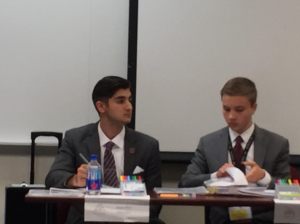 If you have never been involved in speech and debate then I would highly recommend you either visit a club or volunteer to be a community judge at a tournament (or both)! If you live in an area where there are no clubs near by, it may be worth traveling to find out more so that you can start your own club. Becoming a part of a speech and debate club became a non-negotiable parental mandate in our home. As mentioned above, I did not not require my children compete unless they wanted to, but if had to do it over, I would probably make competition a requirement, at least for one year. (And, from what I hear, most students who compete, rarely discontinue competing.)
 Scholarships are the best way to make college affordable! The largest scholarships are generally the academic scholarships which are determined by GPAs and test scores received from
 College Scholarships: Almost every college offers a variety of scholarships. Some stack and some do not. Research the scholarship possibilities at the top colleges of your choice to find out what your students might be able to receive. At some colleges the academic and athletic scholarships do not stack. A word of advice: If your student can earn an equal amount with an academic scholarship as with an athletic scholarship, take the academic scholarship. Athletes get injured or dropped from the team and there goes the scholarship. At Bryan College the athletic and academic scholarships stack so students do not have to choose between the two. You might be surprised at some of the scholarships offered by colleges. Because Bryan College is a Christian college, they offer
 Added Bonuses: Check with the colleges you are considering to see if they have any offers unique to their schools. Bryan College offers students the
  Previously I wrote a
  college. Discovering 2 or 3 colleges of choice should be done before the senior year so that students can take every advantage afforded them as prospective students. It is recommended that they visit the campuses and ask pertinent questions in order to find out what all needs to be completed in order to be accepted at the top colleges of their choice. Yes, I put colleges – plural. It is not unusual to apply to several colleges in order to receive financial aid packages, allowing you to compare apples with apples. Also, it is important to find out which college exams each college accepts, if they want to the writing portion included, if dual enrollment hours will transfer, and/or if the college accepts CLEP or AP credit.
 earn a full ride to Bryan.) This is an affordable test that 9th and 10th graders can take, but the score that counts is the score earned the junior year. There are four different types of scholarships: Federal, State, college and independent. Do your research. The more a student earns in scholarship funds, the better!! A student in Tennessee can earn at least three different grants from the state if qualified! Bryan College has scholarships for homeschoolers, music, theater, Martial Arts, honor students and more! Our athletic and academic scholarships stack (and we had the #1 fishing team in the nation last year). Bryan College hosts two scholarship events each year (one per semester), and each student who attends receives a minimum of $500 in additional scholarship funds up to a full ride. Don’t miss out on scholarship opportunities! There are two highly recommended affordable prep sites that many homeschooling families use for these exams. One is
  there are states that offer college tuition-free to students. However, a free education could be quite costly depending on the out-come. One regret I hear often from Christian parents is sending a student to a secular campus. That is not to say that some students won’t do well on a secular campus, because they can excel there as well (three of my nine will graduate from a secular college). As Christians, we want our students where the Lord wants them. Oftentimes, decisions are made simply on financial concerns without even pursuing enrollment at a private college. I understand! If you had told us (as parents of 9 without spare change) that any of our children would attend and graduate from a private college we might have laughed, but that’s exactly what has happened with several of our children and they have graduated (or will graduate) without student debt. The scholarships offered by colleges can be quite large, especially if they have scholarship events (such as the ones Bryan offers) that include additional scholarship awards!!
 Because I often have parents asking me about accommodations for students with disabilities in college, I organized a workshop led by Bryan College’s Academic Success Center Director and ADA Coordinator, Kristi Strode. What I discovered while attending the workshop is that accommodations are regulated by the Americans with Disabilities Act of 1990/Rehabilitation Act of 1973 – Section 504. There are also other laws that come into play when serving students with disabilities: the Fair Housing Act regarding campus housing needs and FERPA regarding the extremely important issue of confidentiality
 If students are not satisfied with the services they receive through Bryan College’s ADA Services, there is a grievance procedure in place. On our campus, an ADA Compliance Committee is charged with weighing any grievances that come forward. Kristi has also developed a manual for compliance with the ADA mandates.
 Once a student on campus has met with Kristi and figured out a plan for accommodations, then that student must present the needed accommodations through what is known as a Syllabus Addendum to their professors. Kristi promotes self-advocacy, but she will work with both the students and professors.
 Not every child will attend college. Helping your child plan for life after high school should, however, include discussing whether college is the route to take, or not. If college is on your child’s radar, but he/she does not have a clue of what major to choose, that is not uncommon.
 As Christians, the decision to attend college should never be based strictly on financial concerns. Jesus certainly cares about your money and how you spend it, but if your child is doing what the Lord wants him/her to do then He can provide financially for your student’s future. If you had asked me, before our oldest daughter came to Bryan College in 1998, if we could afford it (having 8 other children at home), I would have said, “No way. Not without a miracle,” yet between the scholarships and grants we were able to afford her tuition!
 Of my nine children, 4 of our 5 sons will graduate college (and the fifth is doing quite well as a builder and knife maker). Of my 4 girls only 1 will graduate college as she is pursuing a nursing career. The other 3 daughters are wives and mothers who either homeschool their children, work from home, and/or work alongside their husbands. One daughter attended Bryan one year and then she met her husband. Another daughter attended a women’s discipleship program in Texas where she met her husband. The third daughter worked at a ministry one summer where she met her husband.
 Having nine children is challenging when it comes to figuring out how best to help each individual child pursue the path they should take. We made a few mistakes. One of these mistakes was to push our dreams upon our children, hoping they would live out the life we wanted for ourselves, but had not achieved. At first we weren’t aware we were doing this and, unfortunately, our oldest suffered from this. We did prayerfully consider options and choices, but who knows if our hearts were always pure and our motives were right? It ain’t easy being a parent. We were also more legalistic with our older children (although we were not as legalistic as some), yet I think we found a balance (eventually) between guiding our children versus giving them total freedom in all things or micro-managing their lives. Letting that leash out a little-at-a-time, until the child is able to handle his/her independence is the goal. That looks different for each child.
 daughter was born we were so ready to be parents. She was the first grandchild on my side of the family and she immediately melted the hearts of aunts, uncles, and grandparents. She has not just one, but two entire photo albums (don’t even bring up the 9th child and his photos). We were determined she would be the brightest and she cooperated with our plans by memorizing over 50 Bible verses by the time she was 4 years old. As a child, I always wanted to take gymnastic classes, but was not allowed. So what did we do? We enrolled our daughter in gymnastics at a very young age. At age five, a coach saw that she could do a
  Another regret is not preparing her for college tests. We homeschooled
  whom she homeschools. She, too, was a competitive gymnast and she played basketball and volleyball in high school. When we moved to Tennessee she lost all opportunities to play sports as a homeschooled student and she was devastated. She begged us to let her go to high school her senior year. We began the process, but had our doubts that this was a good decision. The night before the final paperwork was due, my husband and I both realized we should not proceed with this plan. We were about to drop the news on her, when our oldest daughter called her sister and said, “You can’t go to high school this year. It’s our last year to spend time together before I get married. Don’t do it.” So, before we had to tell her that we had changed our minds, she informed us she wanted to be homeschooled that year. This part of the story is a wonderful example of how the Lord works in the lives of our children to direct their paths.
 alone in a room. This was difficult for her. Having come from a family with 9 children, she was rarely alone. Having some alone time is nice, but being alone all the time is not-so-nice. If we could go back we would have allowed her to live with the other girls in the program. She met her husband while in Texas and, as mentioned above, they now live in Texas and homeschool their boys. She has worked several times at jobs where her children could be with her and she has worked from home as well. Right now she’s homeschooling her four boys and is a fitness instructor, running her own business and bringing in an impressive income while doing what she loves.
  quote is this, “If there is no god, nothing matters. If there is a God, nothing else matters.” By this time our son was not happy with God. He did not want conviction for his actions, and he wanted God to be Santa Claus, granting his every wish. Fortunately, he made it through these years and is now in a good place. His first marriage produced a son, but that marriage dissolved. His second marriage did not even last a year. He’s happily married now to a wonderful gal and they just have a son and a daughter. Our son has always been a very hard worker. He is not afraid to try anything, he’s quite skilled in all things construction and he makes knives from scratch. For a few years he was probably the highest paid sibling, working in the oil industry in Colorado. He and his wife moved back to the south so he quit that job and he now owns his own construction company (still making knives on the side). Although he never has taken accredited college classes, he has taken numerous courses to become certified in the industries in which he has been employed. He is quick to see opportunities and will do what it takes to take part in those opportunities. He won the Florida alligator lottery and has caught and killed one ten foot gator (and he has one more chance for a second gator). He is our family comedienne and during reunions he keeps us all in stitches. He is also quite the cook.
 renting it out. He would find items on the side of the road and post them on Craigslist, not for money, but in exchange for fast food meals or to trade for other items. His stories kept us spellbound and in stitches. When he got out of the army, he finished his education at FSU. He pursued a degree because he knew he would be better respected (silly, but true) and the army paid for it. Now he’s married and a father of six
 who continues to buy, flip, sell and rent real estate. He, too, has won the Florida gator lottery and one Christmas his wife and his siblings received a gator wallet, belt, or purse. He co-owns an Engineering firm and dabbles in many different businesses. I love when he visits because he likes to stay busy. At Easter one year, he changed out one of my toilets and took all the men present (including my 2 youngest sons) in the bathroom with him to show them how it is done. One Labor Day weekend he came up for a wedding nearby, and put in a sink and cabinet in my basement Airbnb. He is generous as is evidenced by his quick response to anyone in need. He always enjoyed his athletic experiences and his kiddos are following in his footsteps.
 and they live in Chattanooga with their 2 children, whom they homeschool. He finished his degree while married with children. It was been a slow process due to births of babies and the death of his mother-in-law, after she was diagnosed with cancer fairly. At one time I suggested he CLEP out of classes in order to finish sooner (and affordably) but he loves learning and he loves sitting under professors, so he did not want to take that route. Unfortunately, he soon learned that not all professors are great teachers and some classes are more laborious than they are educational or entertaining. More regrets come along with this son’s story. He had such an amazing portfolio that I knew colleges would want him to apply, and they did! Unfortunately his top choices were expensive colleges and their largest scholarships were tied to
  photographer after high school, but she told me she wanted to go to college. When I asked her why, the best response she could give was that her friends were all in college. When we visited local schools and found out how limited the classes in videography and photography were, coupled with what the classes would cost, she was quick to agree that an internship might be better. After asking our local homeschool friends if they could recommend any local Christian videographers, I was referred to two different companies. Both hired my daughter. They taught different types of videography which was great for my daughter. One man did not pay my daughter in the beginning and, in fact, may have taken slight advantage of her having her clean his
 Next is the fourth son (7th child) who graduated from Bryan College several years ago. When he was in high school we were living back in Florida. After discovering that there is a substantial scholarship offered to students who graduate from high school while living Rhea County, we decided to move back to Tennessee with this son for his senior year. In addition, if a student has lived in Tennessee for a year or more, then he can qualify for the HOPE scholarship which provides even more money for college. Between the county scholarship and the HOPE grant, most of his tuition at Bryan would be covered. Also, by this time homeschoolers could now play sports with the public schools in Tennessee (finally) so he could continue playing baseball with the local high school team. He played baseball and we spent his senior year studying for the college exams because the scholarships he needed were tied to test scores. (It took me a while,
 but I finally admitted that test scores are key to making college affordable in certain situations.) He was one point short of the score he needed at the end of his senior year so, upon the suggestion of a counselor at Bryan College, I kept him in high school one more semester and he spent most of his time taking dual enrolled classes at Bryan while studying to increase his score on the test. He made the score he needed and began full time at Bryan mid-year. His only passion, at this time, was baseball so he was willing to go to college since it meant he could continue playing ball. The academic degree was a bonus. After graduation he moved back to Florida, met his wife and he now runs a business that allows flexible hours so he can stay home with the baby when his wife has to go into the office.
  year for many reasons, including feeling inadequate as a homeschooled student and because many of her friends had done this and had great experiences. Although I did not think it was the best choice (it meant 3 hours a day on a bus), I knew if a child could handle this, it would be this daughter. When I first turned in her transcript I gave her a 3.85 GPA. When she argued that she should have a 4.0 I realized she was right, so I called the counselor and sheepishly asked her to throw away that transcript and I replaced it with a transcript showing a 4.0 GPA. The school required this daughter to take 3 math classes in order to graduate that year so she took Geometry, Algebra II, and Physics. By the second week in physics, I could no longer help her study unless she provided me with an answer key. (My hat is off to physic majors.) She graduated with a 4.0 and attended Bryan College for one year. Wanting to pursue a nursing degree (which Bryan College did not have at that time), she returned to Florida and became a nurse. She has worked with several mid-wives helping to deliver babies and has travelled the world. After helping a family in Uganda build a school, she recently started a non-profit called Start the Ripple so she can continue to help raise funds for projects in third world countries.



 After homeschooling my nine children for more than 32 years, I am finally finished! One of my regrets is not acknowledging the importance of college entrance exams and/or CLEP and AP credit for those heading to college. For years I was convinced that:
 There are now 3 college entrance exams: the
  When should students begin testing? That depends on the student and on the direction your student is headed. Many students begin taking practice tests as early as 8th or 9th grade. Because the tests are not inexpensive ($49+) most parents wait until the junior year to begin taking official tests. Some schools require a college exam test score for dual enrollment purposes. At Bryan College a student can begin dual enrolling after the sophomore year without a test score (transcript required showing 3.0 GPA or higher), unless they are taking a math class in which case the student would have to provide a college exam math score of ACT 22, SAT 540, or CLT 22.

 As a homeschooling mom of 9 (
 When our family lived in Florida and homeschooled students were allowed to dual enroll at the local community college (this was years ago), my oldest two daughters asked to take classes on campus. I had my concerns (I had been a student on that same campus years earlier), but I thought if I was careful with my choices it would be okay. So I signed them up for Computer and Spanish classes. I also made sure my friend signed her boys up for the same classes so that my daughters would have “body guards.” To be honest, nothing terrible happened, but the Spanish professor did take the class to a bar so that the students could hear the bartender speak in his native language and a boy brought in his Playboy Calendar during show and tell. That was bothersome and it would have concerned me more had it been my sons in that class rather than my daughters.
 Homeschooling parents are often criticized for being helicopter parents, holding onto that leash far too long. On the other hand, there are parents who boot their children out of the house at a certain age regardless of the child’s maturity level, the environment, or the college. We want to raise our children so that they can successfully live independent of us, whether that is at age 16, 18 or older. Dual enrollment is a great choice for many, but not necessarily for every high school student.
 In some cases your high school/college GPA from DE courses does not follow you to college unless you go to the college where you took the DE classes. If your child takes classes at the local community college as a DE student and then attends another school after graduating high school, more-than-likely his GPA would start fresh the first semester even though his college credits transfer. With my youngest two sons, because they took DE classes at Bryan and now attend Bryan, the GPA followed them and, in their situations, that was a good thing because they had high GPAs. For high school students who have poor GPAs with their DE credits, this may be a blessing if they are starting over (GPA-wise) at the college they attend.
 Having a student entering high school can be intimidating. You are afraid of messing up. You want to make sure your child is prepared for life after high school. You are open to suggestions and eager to find a perfect (and, hopefully, affordable) product. What you really want is someone to tell you exactly what to do so that you will not mess up. Am I right? I hear you! I have some bad news and some good news to share. The bad news is that there is no “one size fits all” plan for each and every high school student. The good news is that you have so many wonderful opportunities from which to choose that when you do get everything organized, you can enjoy the high school years!!
 High school need not be intimidating or stressful! As you plan, purchase, and begin using materials keep an open mind as to whether a certain program is worth keeping and finishing or if it should be exchanged for something that better suits your student. What sounds good in an advertisement might end up being very disappointing. Why make anyone suffer through finishing something when there are always more options? (On the other hand, there is something to say about finishing a program regardless of its value in order to teach persistence or if you know your student is simply being lazy.)
 Homeschooled Students for Bryan College