 As a homeschooling mom of 9 (finally finished) who is now the Homeschool Specialist at Bryan College I am a huge proponent of dual enrolling! After all, it makes sense to cover both high school and college material at the same time! It is an academic BOGO! And, students who earn college credit in high school have less college to pay for later!
When we host Homeschool Visitation Days at Bryan College, during the Q&A session, a parent will often ask the current Bryan students who were homeschooled the following question: “As a homeschooled student, what was most challenging about coming to college and what would you advise high school students to do to be better prepared?” The answer is almost always that the students struggle with time constraints, planning, and scheduling. The advice they give to future students is to either be part of a structured co-op or to dual enroll before coming to college!
 When our family lived in Florida and homeschooled students were allowed to dual enroll at the local community college (this was years ago), my oldest two daughters asked to take classes on campus. I had my concerns (I had been a student on that same campus years earlier), but I thought if I was careful with my choices it would be okay. So I signed them up for Computer and Spanish classes. I also made sure my friend signed her boys up for the same classes so that my daughters would have “body guards.” To be honest, nothing terrible happened, but the Spanish professor did take the class to a bar so that the students could hear the bartender speak in his native language and a boy brought in his Playboy Calendar during show and tell. That was bothersome and it would have concerned me more had it been my sons in that class rather than my daughters.
A few years later one of our sons wanted to dual enroll and we were convinced he was not ready to be in that environment. As it turned out, for one reason after another, he was not able to take dual enrolled classes until 3 semesters later and, by then, he was so busy with Civil Air Patrol that he ended up taking classes at night at a satellite campus with a room full of older students.
 Homeschooling parents are often criticized for being helicopter parents, holding onto that leash far too long. On the other hand, there are parents who boot their children out of the house at a certain age regardless of the child’s maturity level, the environment, or the college. We want to raise our children so that they can successfully live independent of us, whether that is at age 16, 18 or older. Dual enrollment is a great choice for many, but not necessarily for every high school student.
Because I have been homeschooling for so many years, I have many friends who finished their journey far sooner than I did and an often heard regret by many is allowing their high school students to take classes on campus at a secular college during the high school years. Whether we have the same religious perspectives, or not, most of you would probably agree that the language, sexual conduct, and alcohol and drug use on college campuses is of concern to many. I have one friend whose son was asked to spend the night with a girl the day he met her. Before you get all hot and bothered because you believe that your child would never be negatively persuaded by his/her peers, you could be wrong, and you might end up being one of those parents having regrets. Truth be told, this should be taken on a case-by-case basis. There are no clear guidelines to determine whether a child is ready for this or not. Back in Florida where I previously lived, the homeschool students band together, share information on which professors to avoid and which to pursue and, for the most part, create a safe-environment among themselves. We do not have to throw out the baby with the bath water, but we do need to take steps to ensure our student’s well-being.
There are definitely precautions a parent will want to take when sending a teen to a secular college campus as a high school student. Sometimes on-line classes may be preferable to on-campus classes because the negative peer influence is removed (for the most part). Taking classes at satellite locations or at night diminishes the number of students whose goal is to party more than to receive an education. If, like me, you are a Christian and having classes taught from a biblical worldview is important to you, then research those options. My youngest boys dual enrolled at Bryan College, both on-line and on-campus. When they were on-campus they blended in with the rest of the students and oftentimes no one was even aware they were high school students.
 In some cases your high school/college GPA from DE courses does not follow you to college unless you go to the college where you took the DE classes. If your child takes classes at the local community college as a DE student and then attends another school after graduating high school, more-than-likely his GPA would start fresh the first semester even though his college credits transfer. With my youngest two sons, because they took DE classes at Bryan and now attend Bryan, the GPA followed them and, in their situations, that was a good thing because they had high GPAs. For high school students who have poor GPAs with their DE credits, this may be a blessing if they are starting over (GPA-wise) at the college they attend.
Another question often asked is whether DE credits will transfer to another school. The answer to this question is, “It depends!” It depends on the school the student attends. It depends on the major the student is pursuing. There are some colleges that accept very little credit from other colleges and there are some that will transfer almost any college credit that a student has earned. Generally, if the high school student has earned an AA, then they can take the AA with them to almost any college. Using words like “generally” and “usually” and “almost any college” are necessary because there are no firm, set-in-stone mandates. For these reasons I would suggest that if your students are going to dual enroll that they take basic classes that may likely be accepted at many colleges. If your student knows which college he/she plans to attend, then find out from that college which DE classes will transfer. The same is true of AP classes and CLEP credits. There are no across-the-board answers that apply to this discussion.
Two more bonus suggestions and then some advice from a friend. Suggestion #1: Your homeschooled students can graduate any time of the year so if there are summer DE classes your students would like to take before graduating high school, they can take those classes in the summer and graduate high school in August! Suggestion #2: Taking college math classes while in high school has the added benefit of improving the math scores on the college entrance exams (assuming the student does well in the class). Not only are the students completing college math credits, but their raised test scores could very well earn additional scholarships!
Here are some of the possible outcomes to dual enrollment experiences:
- Positive outcome: A great experience is enjoyed and both high school and college credits are earned at the same time.
- Positive outcome: Money is saved and students earn their degrees much faster by completing college credits during high school.
- Positive outcome: Some states offer scholarships related to dual enrollment credits earned so there is potential for additional college funds to be earned.
- Negative outcome: Some students are eager to take classes, but they do not take them seriously and as a result they do not make the grades necessary to continue with the process. (In some states the DE grants are tied to GPAs earned.) They are removed from the program.
- Negative outcome: Some students become so preoccupied with the social activities that they lose site of the goal and play away their time on campus, failing classes.
- Negative outcome: Some students’ values and beliefs totally change when they are presented with beliefs alternative to their parents. (Young adults should be free to decide what they believe in regard to the great questions of life, but some students are not ready to reasonably and logically discuss some of these deeper issues until they are older.)
- Negative outcome: Some students, not knowing how to handle the freedom they have been given in this setting, become rude, crude and disobedient to their parents. They obtain a superior attitude and life at home is less than pleasant.
Advice from a friend: When approaching colleges about their dual enrollment policies, be polite because dual enrollment laws are often broad and vague. Each college can interpret them as they wish. Rules will change year-to-year so be flexible, polite, and grateful.
Make sure your child stays rooted at home and in a peer community. They are at the age where they are hungry for community and if they don’t have it at home they will find it where it’s convenient. It is a battle worth fighting, but you have to give them something.
Be careful just gathering credits. Know where your child is going from here and check in with that destination to make sure you are following their recommendations. Find people who have walked similar (degree wise) paths recently. Information from when their son majored in “x” at “y” is usually irrelevant if it has been more than three years. That is generally true of all things college. It changes year to year. — Cathy, from Florida
There you have it. The good, the bad, and the ugly of all things dual enrollment. To dual enroll on-line or on campus at Bryan College one can apply on-line, pay a small application fee, and provide a transcript showing the completion of the sophomore year with a GPA of 3.0 or higher. If a DE student wants to take math classes at Bryan then he/she must have scored a 22 on the ACT (or comparable on the SAT or CLT). Bryan offers on-line classes during the fall, spring and twice during the summer (six week sessions). Technically, a dual enrolled student could take classes through Bryan College during 10 semesters before graduating high school. For more information go to www.bryan.edu/de. If you have not downloaded the free e resource I put together to help you plan the high school years, it is available here: www.bryan.edu/ebook

 Because I often have parents asking me about accommodations for students with disabilities in college, I organized a workshop led by Bryan College’s Academic Success Center Director and ADA Coordinator, Kristi Strode. What I discovered while attending the workshop is that accommodations are regulated by the Americans with Disabilities Act of 1990/Rehabilitation Act of 1973 – Section 504. There are also other laws that come into play when serving students with disabilities: the Fair Housing Act regarding campus housing needs and FERPA regarding the extremely important issue of confidentiality
 If students are not satisfied with the services they receive through Bryan College’s ADA Services, there is a grievance procedure in place. On our campus, an ADA Compliance Committee is charged with weighing any grievances that come forward. Kristi has also developed a manual for compliance with the ADA mandates.
 Once a student on campus has met with Kristi and figured out a plan for accommodations, then that student must present the needed accommodations through what is known as a Syllabus Addendum to their professors. Kristi promotes self-advocacy, but she will work with both the students and professors.
 Not every child will attend college. Helping your child plan for life after high school should, however, include discussing whether college is the route to take, or not. If college is on your child’s radar, but he/she does not have a clue of what major to choose, that is not uncommon.
 As Christians, the decision to attend college should never be based strictly on financial concerns. Jesus certainly cares about your money and how you spend it, but if your child is doing what the Lord wants him/her to do then He can provide financially for your student’s future. If you had asked me, before our oldest daughter came to Bryan College in 1998, if we could afford it (having 8 other children at home), I would have said, “No way. Not without a miracle,” yet between the scholarships and grants we were able to afford her tuition!
 Of my nine children, 4 of our 5 sons will graduate college (and the fifth is doing quite well as a builder and knife maker). Of my 4 girls only 1 will graduate college as she is pursuing a nursing career. The other 3 daughters are wives and mothers who either homeschool their children, work from home, and/or work alongside their husbands. One daughter attended Bryan one year and then she met her husband. Another daughter attended a women’s discipleship program in Texas where she met her husband. The third daughter worked at a ministry one summer where she met her husband.
 After homeschooling my nine children for more than 32 years, I am finally finished! One of my regrets is not acknowledging the importance of college entrance exams and/or CLEP and AP credit for those heading to college. For years I was convinced that:
 There are now 3 college entrance exams: the
  When should students begin testing? That depends on the student and on the direction your student is headed. Many students begin taking practice tests as early as 8th or 9th grade. Because the tests are not inexpensive ($49+) most parents wait until the junior year to begin taking official tests. Some schools require a college exam test score for dual enrollment purposes. At Bryan College a student can begin dual enrolling after the sophomore year without a test score (transcript required showing 3.0 GPA or higher), unless they are taking a math class in which case the student would have to provide a college exam math score of ACT 22, SAT 540, or CLT 22.

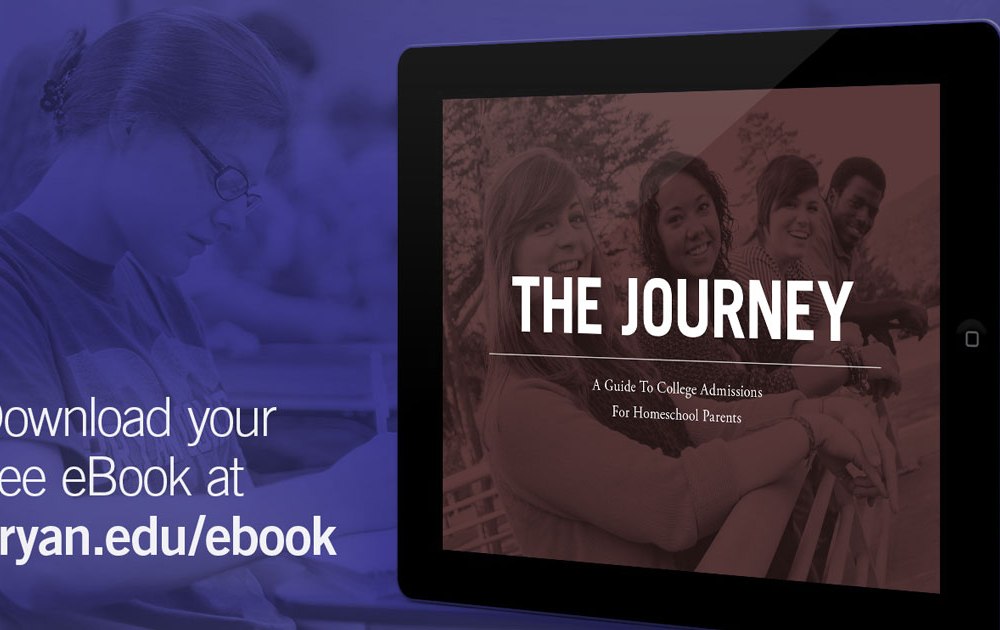
 Homeschooling families are at a disadvantage to parents of children who attend a brick and mortar school because we do not have guidance counselors who are available to help our students plan their high school years! More than a few of us have missed out on many opportunities because of this lack of knowledge. For example, I did not realize that the PSAT score received during a student’s junior year (and only offered once a year) is tied to the National Merit Scholarship. (NMS semi-finalists receive full four years of tuition at Bryan College.) This is not the only “secret” many of us are unaware of and, for that reason, as the Homeschool Specialist at Bryan College, I decided to research and publish as much pertinent information to a homeschooling parent of high school students that I could find and verify!
 For many years the only two college entrance exams offered to students have been the SAT and the ACT. Oftentimes Christians have felt at a disadvantage for several reasons, to-wit:

 Yes! You read that right, but time is of the essence. If your senior has applied and been accepted to Bryan College (submitting a score of ACT 21 or higher) then he/she will be invited to a special scholarship event taking place the first weekend in November! The event is free of charge and each participant will receive an additional $200 40 $2,000 in scholarship money, up to a full ride! The amounts awarded will be based on interviews, auditions, and an essay (written on campus)! Those qualifying for the honors program receive additional funds! Families are encouraged to attend this free event as well. A reception is planned for those attending. If you have a senior who has not yet applied, but may be interested in this event, email me at pat.wesosolowski@bryan.edu.
 FAFSA stands for Free Application for Federal Student Aid Every college bound student (and parents of the student) should fill out the FAFSA even if the student does not plan to receive Federal aid. Colleges use the information provided by the FAFSA to help determine private scholarship amounts. Quoted from the FAFSA website: Federal Student Aid is responsible for managing the student financial assistance programs authorized under Title IV of the Higher Education Act of 1965. These programs provide grants, loans, and work-study funds to students attending college or career school. https://fafsa.ed.gov/
 Homeschooled Students for Bryan College