As a Christian parent who has homeschooled your children, you have likely invested significant time and effort in shaping their values and beliefs. You have instilled in them a strong foundation in the Christian faith, and have guided them in living a life that honors God. However, as your children approach adulthood and begin to make their own decisions, you may find that their choices conflict with your Christian values. One such decision that can cause significant conflict is sending your child to a university whose teachings are opposed to your worldview. This is not to say that a Christian who attends a secular college cannot succeed. They can. Two of my sons completed their education on secular campuses for varying reasons, and neither one had a crises of faith. Both were older and married when they completed their education and I believe their maturity contributed to their ability not to be swayed by opposing worldviews or peer pressure. On the other hand, I have quite a few friends whose children attended a secular college immediately after high school with repercussions that were heartbreaking.
Attending a university whose teachings conflict with your Christian values can lead to a crisis of faith for your child. During their time at college, they will likely be exposed to a wide range of ideas and worldviews that may challenge their beliefs. This can be especially difficult for young adults who are still developing their own worldview and sense of identity. If they are not well-equipped to navigate these challenges, it can lead to confusion, doubt, and even a loss of faith.
When the teachings at a college are directly opposed to your Christian beliefs, the result can be a disconnect between your child’s values and their actions. In other words, they may begin to live a life that is inconsistent with the values you have taught them. They may begin to engage in behaviors and activities which are not consistent with Christian values. This can cause significant stress and conflict for both you and your child.
A breakdown in family relationships can happen when a child’s values and beliefs conflict with those of their parents, and that can lead to tension and conflict within the family. This can be especially difficult for Christian families whose faith is often a core part of the family’s identity. If your child begins to question their faith or live a life that is inconsistent with your values, it can cause significant strain on your relationship with them.
Sending your child to a college whose teachings conflict with your Christian values could be a poor choice with negative outcomes, leading to a crisis of faith, a disconnect between your child’s values and their actions, and a breakdown in family relationships. As a Christian parent, it is important to carefully consider the values and beliefs of any college before sending your child there. If you do choose to send your child to a college whose teachings conflict with your worldview, it is important to equip them with the tools they need to navigate these challenges while staying true to their faith. Remember, your child’s spiritual well-being is more important than their academic success, and you don’t want to forfeit one for the sake of the other.
In recent years, there has been a growing trend of colleges actively seeking homeschooled students. In the past, homeschooled students were often viewed with skepticism by colleges, but this perception is changing as more and more homeschoolers excel academically and prove themselves to be valuable members of their communities. Here are some reasons why colleges are seeking homeschooled students:
Unique Perspective: Homeschooled students often bring a unique perspective to college classrooms. These students are typically self-motivated, independent, and able to manage their time effectively. They also tend to be creative problem-solvers who are used to thinking outside the box. This perspective can be valuable in college courses and can contribute to a more diverse and engaging academic environment.
Well-Rounded Education: Homeschooling allows students to receive a well-rounded education that emphasizes critical thinking, communication, and leadership skills. Homeschooled students have more flexibility in their curriculum and can pursue their interests in-depth. They are also more likely to have experience with community service, extracurricular activities, and internships. These experiences can help homeschooled students stand out in college admissions and contribute to their success in college.
Strong Work Ethic: Homeschooled students often have a strong work ethic that is attractive to colleges. These students are used to working independently and taking responsibility for their education. They are also typically motivated by a love of learning rather than external rewards like grades or test scores. This work ethic can translate into academic success in college and beyond.
College Readiness: Homeschooled students tend to be well-prepared for college-level coursework. They have experience with self-directed learning, research, and writing. They also tend to have strong study habits and time management skills. These skills are essential for success in college and can help homeschooled students thrive in the college environment.
Dedicated to Learning: Homeschooled students are often dedicated to lifelong learning. They are used to taking responsibility for their education and are more likely to pursue learning opportunities outside of the classroom. This dedication to learning can lead to academic success in college and beyond and can make homeschooled students valuable members of the college community.
Many colleges are seeking homeschooled students and, for this reason, many have hired homeschool counselors. Homeschooled students, in general, bring a valuable set of skills and experiences to the college environment and are well-prepared for academic success. As homeschooling becomes more mainstream and accepted, it is likely that more colleges will actively seek out these students. My position was created at Bryan College as a result of the great experiences the faculty and staff had with the homeschooled students on campus. Our current president, Dr. Mann, is a homeschool dad. Many of our faculty and staff homeschool their children and Bryan College offers a homeschool scholarship!
A friend sent me an article enumerating reasons that homeschoolers fail. This friend asked me to share my thoughts. As I read the article I wondered how many families will be negatively impacted by this list of reasons for failure. Unfortunately, this article may make parents feel insecure, second guess their experience, or make unnecessary changes. If changes need to be made then, by all means, make the changes that need to be made. However, I have seen families totally change from an enjoyable homeschool experience, to a more structured experience simply because someone questioned whether what they are doing is the best for their student. One year I met a mom who had organized a unit study centered around baseball for the son’s entire academic year. The son loved it. The mom loved it. The dad loved seeing them loving it but, when the dad made the following remark, he instilled so much doubt that his wife totally changed plans for the following academic year. He said, “That’s great, but what if he’s getting behind?” She second guessed her success and the next year she put her son in front of a computer for a full on-line curriculum. He was miserable, she was miserable and after a little encouragement, she was excited to return to teaching unit study style. (Read this blog to expound on that thought.)
Although the article I read contains information that may be pertinent and worth pondering, I am afraid that it may cause unrest and dissatisfaction of situations that are working well for particular families. When I asked the friend who shared this article how she felt after reading it, she said, “I read this and got that panicked feeling and started questioning if I did this all wrong or if my kids are behind.” As well intentioned as the author may be, and in spite of the fact that some of the information may be practical and applicable to a certain degree, my immediate thought was that this article will cause more insecurities among homeschooling parents than it will create changes. There are comments worth considering in this article, but I do believe parents need to be careful not to throw out the baby with the bath water simply because an article may point a finger at a particular homeschooling style and declare that as a reason for failure.
The article mentioned defines failure as “not accomplishing an acceptable standard.” What is an acceptable standard? The article goes on to define that as, “… A level of accomplishment that would be found average or better by an informed objective analysis.” Those statements beg many questions such as, “Can one be successful without accomplishing an acceptable standard?” “Who determines what is average or better than average in terms of accomplishment?” Those questions aside, let’s talk about each reason listed for failure.
Failure #1: Inadequate structure, poor organization – failure to establish goals. Successfully completing high school does require intention and goal setting so that students are well prepared for life after high school, regardless of the path that entails. However, elementary and even the middle school years do not need to be structured in a rigid fashion. Establishing goals for high school is a great idea. In an article about Olympic Gold Medal winner, Jamie Anderson, her mom shared that she homeschooled her children by placing a priority on character. She encouraged her children to play outdoors and to pursue their interests. Apparently she has been so successful homeschooling her eight children that Jamie plans to copy what her mom did 100%. This mom would have been criticized for her lack of structure and perhaps even her failure to establish academic goals, but who can argue with the outcome? She had goals, but one of her goals was to be less structured. It worked for her family.
Failure #2: Not Adapting to How A Child Learns. This is somewhat important, but children can adjust to teaching methods that may not be adapted to how they learn. After all, when I was in school the entire classroom (24 to 30 students) was taught the same way. Having nine children of my own, I did attempt (somewhat) to address each child’s learning style after I listened to a talk years ago by Cynthia Tobias entitled, “How Children Learn.” To be honest, I was so busy with homeschooling, taking care of babies, making meals, keeping up with laundry, going to multiple church services and handling so many other responsibilities that I probably did not put as much effort into this as others. Regardless, my children (for the most part) did well and have survived. Eight of the nine are married and my youngest (single) daughter is traveling all over the world, working to make life better for many people.
Failure #3: Switching Curriculum Constantly Although I can see a benefit to consistency, one of the beauties of homeschooling is the freedom to change things up for any number of reasons. Perhaps what you are using is not working, or something new and exciting becomes available. Our family homeschooled co-op style using unit studies so we used different materials every year. In this article an analogy was used insinuating that if you have a great cake recipe, you do not switch ingredients or change it up. You stick with what works. The analogy breaks down when one discovers he/she is gluten intolerant and can no longer make cakes that include ingredients containing gluten.
Failure #4: You can’t teach what you don’t know If I believed that I had to know everything that my children needed to learn, then I would have quit after my children finished third grade. (Although I attended college, what I did not know in terms of what I would be teaching my children was vast.) As it turned out, I learned right alongside them (without letting them know how little I knew). And, if a certain subject is required, and you feel inadequate to teach that subject, then you find a class, or a tutor, or some other creative solution. You can teach what you don’t know if you are willing to learn right along with your children.
Failure #5: Using tools not intended to be complete (supplements, apps, websites) Well now, this comment will probably step on the toes of many who use supplements, apps, and/or the KHAN academy. These tools can be useful if the parent and/or student understands exactly what is being offered. If there are holes, or gaps in these products, that can be remedied by the parent or student or by another program. The insinuation here is that these free products are too difficult to resist and what they offer may be of little to no value if it is not a complete program.
Failure # 6: Expecting to educate in too little time Trying to reassure parents in the past I have been known to suggest that you could try to not teach your child anything up until their senior year and then totally catch them up in the 12th grade. (Many would say that would be expecting too much in too little time, right?) Yet I did that with one of mine. This particular son attended co-ops, but didn’t really pay much attention. So during his 12th grade year I said, “We are doing two things this year, #1 – Studying for the college exam because you need a certain score for the scholarship to Bryan College and #2 – Filling in any gaps and reviewing everything you should have learned up until now.” And, guess what? He did fine. He graduated, married and is running his own business! My youngest son could have cared less about anything academic until his intellectual fires were lit during a co-op his tenth year of high school. Wowza. Did he make up for lost time after that! He began dual enrolling in college classes, carries a 4.0 GPA and plans to graduate college with at least two majors. My mentor told me (this was in 1985) that I should not even worry about curriculum during the elementary grades and possibly even during middle school. She said that what I should do is make learning fun and use natural, every day opportunities to fuel the fire for knowledge. She also said I should read aloud, often. I heeded this advice and I believe that is one of the reasons I enjoyed homeschooling so much! If you teach your child how to find the information they need, when they need it, then they will be life-long learners who will be able to accomplish anything they put their mind to when properly motivated. As Sir Ken Robinson said, “You can’t know everything about everything.”
Failure #7: There’s always tomorrow This statement suggests that procrastinators will fail and that lost time cannot be recovered. But, there is (often) always tomorrow and I wish more homeschooling parents would remember that. Years ago, at a worldview seminar I organized, I stayed in host housing and one of the perks to the hosts was allowing their teens to come to the seminar for free, yet the parents did not allow their students to attend because they were behind in their school work. Really? They could have caught up on their school work another day. Instead, they missed out on an amazing six hour seminar that they could have attended for free. After hurricane Katrina hit in 2005, my 16 year old son went to Mississippi to help with the clean-up. He stayed there two weeks. Recently he attended a meeting where I was speaking to homeschooling parents and he shared with the group that many more of his friends would have volunteered, but their parents would not allow them to miss school. He then encouraged parents to weigh the benefits of allowing their students to participate in opportunities that arise. The year the State of Florida was killing Terry Schiavo we took a break from all things academic and became very involved with the protest at the capitol, on the streets, and even where Terry Schiavo was being starved (dehydrated) to death. My children learned a lot during that experience. Realizing that no one is guaranteed one more day on this earth, it is commonly assumed that there is always tomorrow. Did you have a bad day today? There is always tomorrow. Did you not get as much accomplished as you planned? There is always tomorrow. Do you want to take a break from academics in order to minister to others? There is always tomorrow. Is someone in your immediate (or extended) family ill and in need of care? There is always tomorrow.
When you come across articles that make you feel unsettled, be careful not to place guilt where guilt should not be placed. Articles that list reasons for failure will never apply to everyone reading the article. For that reason, read the article the same way you eat a piece of steak, chew up the meat and spit out the gristle. If changes need to be made, make changes. If you are enjoying your homeschool experience and your children are thriving, carry on!
Colleges that are test optional do not require applicants to submit a test score for admission. Some colleges extend that policy to merit awards, being willing to offer merit scholarships based on a student’s GPA rather than a test score. During COVID many colleges became test optional simply because students did not have a way to take the ACT or the SAT. After testing possibilities returned, many colleges discontinued being test optional. Before Covid, Bryan College required both test scores and high school GPAs for merit scholarships. During COVID Bryan became test optional, using either a test score or a high school GPA alone for merit scholarships. This year Bryan College announced that they are now using either a test score or a dual enrollment GPA (minimum 9 credits earned) for merit scholarships. This is great news for students who have high dual enrollment GPAs, but who test poorly. A few years ago my three youngest children were students at Bryan College. As dual enrolled students they made great grades (4.0). However, they were not good test takers so they did not earn the highest merit scholarships. Had we had this policy back then, all three would have earned the highest merit scholarship (based on a DE GPA of 3.75 or higher).
In order to take advantage of this policy, students need to plan far enough ahead so that they can earn at least nine hours of dual enrollment credit while in high school. The higher the GPA, the better. Bryan College also hosts a scholarship event each semester for qualifying seniors who have been accepted to Bryan College. In order to attend the event held in November a senior will have to have a certain test score (ACT 21, SAT 1060 or CLT 68 was the 2022/2023 requirement) or have earned at least nine credits in dual enrollment with a 3.0 or higher GPA. For seniors who have not obtained either the test score or the completion of nine dual enrollment credits, they can make plans to meet requirements during the fall semester and attend the second scholarship event offered at Bryan in February of the spring semester.
Personally, I am not aware of any other colleges offering merit scholarships based on dual enrollment GPAs. I love that Bryan College has embraced this policy.
Homeschoolers can benefit from a college that is test-optional and uses GPA for enrollment in several ways:
It reduces the pressure on standardized testing: Homeschoolers may not have access to traditional testing opportunities such as the SAT or ACT. Even if they do, they may not perform as well on these tests compared to their counterparts who attended traditional schools. A test-optional policy reduces the importance of these tests and allows homeschoolers to be evaluated on their GPA.
It highlights their academic achievements: Since homeschoolers do not have a traditional transcript, their dual enrollment GPA can showcase their academic achievements. If their GPA is strong, it can be an indicator of their ability to handle college-level coursework.
It may level the playing field: Homeschoolers may face bias and misconceptions about their education. A test-optional policy can help reduce these biases and provide a more equitable evaluation process.
Overall, a test-optional policy that considers dual enrollment GPA for enrollment can be beneficial for homeschoolers and provide them with a fair opportunity to not only gain admission to college, but to earn merit scholarships and, at Bryan College, to qualify for an additional scholarship event.
Tennessee students can take 30 hours of dual enrollment classes at Bryan College for less than $200 tuition (total), plus books and fees, and out-of-state students are offered a $200 scholarship per class. For more information send an email to bcde@bryan.edu.
If you have students who have completed their junior year who are interested in attending Bryan College, the sooner they apply the better. There is no application fee. Planning ahead not only saves a student a lot of money (via dual enrollment), but it can also earn the student additional scholarship funds, reducing the overall price of college considerably. I am the homeschool admissions counselor at Bryan College. If you would like to be on my email list, receiving updates and announcements, send me an email: pat.wesolowski@bryan.edu.
Oftentimes homeschooled students miss out on opportunities because they are unaware of available events as well as the deadlines associated with certain opportunities. Planning ahead will help your students successfully complete high school and be well prepared for life after graduation. Below are suggestions to consider for each grade of high school. There are links included that will direct you to sites with more information or past blog posts that address particular subject matters. Some of the information is repeated in more than one grade and, although it may seem redundant, it allows parents to skip to a later grade if their students have already completed an earlier grade.
General Advice:
Begin helping the student discover his/her gifts and talents. Discuss classes to include in the high school years. English, history, science and math in addition to classes that interest the student, encourage character, teach computer skills, and more. Include specialized classes or co-ops that encourage the talents and interests of the student when possible. Be aware that there may be state requirements regarding particular courses necessary for a homeschooled student to earn state grants. In addition, some colleges have certain requirements regarding classes that should be included on a student’s high school transcript. Not all colleges require two years of the same foreign language in high school, but some do. Most expect to see four credits of English, three or four years of math, three credits of science (with at least one lab), and three credits social studies. Many states have added a half credit for personal finance to their suggested guidelines. There are no laws regarding the credits a homeschooled student needs to graduate, only guidelines, but knowing the requirements for state grants as well as the expectations of the colleges your student is considering will help you plan to meet your state’s requirements and the requirements of your top college choices. The state of Tennessee does not require a homeschooled student to take particular classes in order to earn state grants, but an ACT or SAT score is required. Some states may require certain GPAs, test scores and/or community service for grants. The grants often have deadlines for application so be sure you are aware of that information before the student begins his senior year. Bryan College does not have specific requirements for high school courses but, depending on the student’s desired major, certain high school classes may be recommended by faculty members. For instance, if a student plans to pursue an Engineering degree, then taking an increased number of math and science classes during high school will help better prepare the student for that major.
Opportunities: Discover local opportunities for co-ops, classes, athletic, music, drama, and additional events that may be worth pursuing. Look into Civil Air Patrol and TeenPact. Join a local speech and debate club (or, in the absence of a local club, start one). STOA and NCFCA are two Christian homeschool speech and debate clubs. One of my regrets after homeschooling my 9 for more than 32 years is not getting involved in speech and debate clubs until my oldest four had completed high school.
9th grade
Transcripts: Keep records to be inserted in a transcript including subjects studied along with credits and grades earned. If you would like to use the Transcript Genie offered for free by Bryan College to build a professional-looking transcript (it even calculates and weights grades), go to this link, scroll down and enter your email address. There is also a free eBook called The Journey that you can request and it will provide information on testing, scholarships, and more.
Community Service: Look for opportunities for your student (and/or the entire family) to participate in volunteer opportunities, ministries, camps, classes, and more. Keep a record of volunteer hours and hold on to any certificates earned.
Portfolio: Begin collecting and filing documents that provide proof of the student’s participation in community service, mission trips, camps, classes, athletic events, awards, certifications, and more. If your student is featured in an article, add a copy of the article to the portfolio. If your student has work published, include that in the portfolio.
Testing: Participate in the PSAT testing if possible. This is an affordable test for students offered in October and, in 2021, an additional test date in January was added. Register your student for the CLT10. Students can take this test several times a year at home, for free, on a computer, with the parent proctoring. Parents can order the analytics for a small fee.
Summer: Check out camps, mission trips, internships and apprenticeships that might interest your student. A student of this age can often be trained to work at camps, gaining experience, responsibility, and qualifications for potential summer job opportunities. Making money, although beneficial, should not always be the deciding factor when choosing between opportunities. Students may gain more experience and character growth in volunteer positions.
Dual Enrollment: Look into dual enrollment classes for the 10th grade year. Dual enrollment is a great opportunity as it allows a student to earn both high school and college credit at the same time, but it is not without dangers. Homeschooled students often make a few mistakes pertaining to dual enrollment and this post will help you avoid those mistakes. Choosing which dual enrollment class a student should take is also important.
10th grade
If the state in which you live offers grants and scholarships for dual enrollment and college then find out the qualifications for participation in order to make sure your student meets the requirements. Bryan College allows 10th graders to take dual enrollment classes but the requirements are more stringent than the requirements for 11th and 12th graders, so planning ahead to meet those requirements is important.
Plan classes according to academic needs, talents and interest, and opportunity.
Testing: Participate in the PSAT testing that takes place if possible. Register your student for the CLT10. Students can take this free test several times a year at home, on a computer, with the parent proctoring. Parents can order the analytics for a small fee. 10th graders taking the CLT10 may qualify for scholarships offered by the CLT. Consider having your student take college entrance exams, particularly if test scores are required for dual enrollment classes. Most colleges accept both the ACT and the SAT. Many Christian colleges accept the CLT.
College Credits: If your student is ready to take college classes, find a college that is a good fit for your student. (Bryan College offers online classes four times a year with out-of-state scholarships.) Be sure you discover guidelines for dual enrollment because, in some instances, college entrance exam test scores are required. Consider CLEP and AP possibilities for additional college credit.
Opportunities: Discover local opportunities for co-ops, classes, athletes, music, drama, and additional opportunities. Look into Civil Air Patrol and TeenPact. Join a local speech and debate club (or, in the absence of a local club, start one) STOA or NCFCA.
Summer: Consider dual enrollment classes, camps, mission trips, internships and apprenticeships. A student of this age can often be trained to work at camps, gaining experience, responsibility, and qualifications for potential summer job opportunities.
11th grade
Plan classes according to academic needs, talents and interest, and opportunity.
If the state in which you live offers grants and scholarships for dual enrollment and college, find out the qualifications for participation.
Preparing for College: Attend college fairs and visit colleges of interest. Take college entrance exams, pinpoint weaknesses and tutor to the weakness. Purchase materials that will help improve test scores. Consider on-line tutoring for test prep such as 36 University (enter code “bryan” and save $3 a month, reducing the price to $12 a month). Schedule campus visits at colleges of interest. Begin with the virtual tours offered online, and visit in person when possible, preferably when classes are taking place so the student can attend classes. Begin applying to colleges of interest when permitted (find out if there are events or times when the application fees are waived). Research scholarship and grant opportunities offered by the state in which you live, the colleges you are considering, as well as independent scholarships. This article gives suggestions for making college affordable.
Testing: Discover opportunities for taking the PSAT the summer before, or at the beginning of the 11th grade year. It is the score from the PSAT taken during the 11th grade year that qualifies students for National Merit Scholarships. A National Merit Semi-finalist receives full tuition at Bryan College.
November: Answers in Genesis sponsors a free college expo for high school students that includes a free ticket to the Ark and the possibility of winning a $500 scholarship.
Summer: Consider attending camps that are held at the college your student is considering attending. Request a FAFSA ID for student and parent in order to fill out the FAFSA the senior year.
12th grade
Plan classes according to academic needs, talents and interest, and opportunity. If you would like to print a diploma for your student, the free e-resource mentioned, The Journey, includes an editable diploma template. None of my nine children have ever needed a diploma. What they did need was a completed transcript.
Continue attending college fairs and visiting colleges of interest unless a firm decision has been made at this time.
If the state in which you live offers grants and scholarships for dual enrollment (and college) find out the qualifications for participation early in the year because deadlines are often tied to certain opportunities. If your state offers grants for college, but you know your student will be attending an out-of-state college, then using the college grant (borrowing against it) for dual enrollment will save you money in the long run. Students planning to attend an in-state college may also want to borrow against a state grant for dual enrollment because the cost of dual enrollment classes is often much lower than the cost of traditional college classes.
Make sure all classes necessary for graduation are scheduled to be completed either by participation in class or by testing.
Apply to colleges of interest.
Continue earning college credits via dual enrollment classes, CLEP (can now be taken virtually from home) or AP tests (can now be taken from home). Continue taking college entrance exams. As a result of COVID many colleges are test optional meaning they will use a student’s GPA for merit scholarship, without requiring a test score. However, most test optional colleges will accept test scores and use the scores to award scholarship amounts if the exam score increases the amount a student can earn beyond what the GPA entitles the student to be awarded.
Attend scholarship events (when applicable) that take place at the college of interest. At Bryan College these events take place once during each semester. These are invitation only events, extended to qualifying seniors who have applied to Bryan College and each participant receives additional scholarship funds of varying amounts based on an interview with faculty or staff.
Be sure your student has developed time management skills. If the student is taking a dual enrollment class or attending a structured co-op then, more-than-likely, the student is honing these skills. This article offers five steps to help students improve their study skills.
October: Fill out the FAFSA. You may want to wait a few days because the first few days are filled with so many families completing the FAFSA that the site gets bogged down. But, do not wait too long because in certain situations scholarships may be first come, first serve.
November: Answers in Genesis sponsors a free college expo for high school students that includes a free ticket to the Ark and the possibility of winning a $500 scholarship.
Spring: Be sure all subjects necessary for graduation will be completed. There may be state requirements for homeschooled students to complete specific courses in order to earn state grants. Some colleges have certain requirements regarding classes that should be included on a student’s transcript. Make sure all requirements are met. Continue taking college entrance exams if higher scores are needed for scholarships.
Summer: Consider sending your student to camps that are held at the college your student plans to attend if that’s an option. At Bryan College a senior enrolled at Bryan will earn a small scholarship for attending Bryan’s Summer Institute. A high school graduate can also dual enroll with Bryan College the summer after graduation. If your student plans to live on campus, then he may very well find a suitable roommate while attending the camp.
The earlier you start preparing your high school student for success, the better it will be for everyone involved. However, if you are like I was with my oldest kiddos, and you are late to the game, do what you can to play catch up and make up for lost time. Even though my older students were ill prepared (thanks to my lack of knowledge concerning many of these issues), they did well after high school. Could they have done better or had an easier time getting to where they wanted to go had I better prepared them? Probably, but I was doing all I knew to do at that time. Give yourself some grace and utilize the information that is available to you and your students now that you are aware of the options and opportunities. Feel free to email me at pat.wesolowski@bryan.edu if you have any questions or if I can help in any way.
At a visitation day at Bryan College several years ago, we had a question and answer session set up with a panel of ten college students who were homeschooled. A parent asked, “What was the most difficult adjustment to college life and, what would you recommend to incoming students in order to be better prepared?” All ten students said that time management was the most difficult adjustment. The recommendation made by the students was for high school students to either participate in a co-op or a class where they answer to someone other than mom or, if able, to take dual enrollment classes. Unless the student is taking a class on time management, this skill is not learned through the curriculum but, rather, through the process. The flexibility that homeschooling allows, although advantageous, is often a contributing factor to poor time management. Having to complete homework, turn in assignments, take tests, and participate in group forums (or activities) with deadlines forces students to sink or swim. We don’t want them to sink, so let’s help them swim.
Although dual enrollment is a great way to introduce high school students to the rigor of college classes, your students will do better if they have learned how to manage their time beforehand. Students who are able to organize their schedules, develop good study skills, and manage their time well will have much less stress than students who fly by the seat of their pants, hoping everything will come together in the end. In several of the articles I’ve written, I point out that there are neglected subjects that may be as important, or more important, than the core classes for high school students. Time management is a skill that should be taught long before students head off to college, so let’s talk about the nuts and bolts of how to do this.
Set the Environment: Because students are very diverse in how they learn, there is no black and white, one-size-fits all method, but the principles are similar. Where to begin? Let’s start with where your students study. Encourage them to prepare a study environment that works well for them. When studying, students should put their phone on silent, and put it away so they won’t be tempted to pick it up and check notifications. Create a ritual that enhances their ability to concentrate. For some, that will mean working in total silence while for others, background music may be helpful. Running a diffuser, lighting a candle, or turning on a fan are other suggestions that could be incorporated into the process. Some students can sit at a dining table with activities going on all around them and not be distracted, while others need a setting with as few distractions as possible. When I was in college I doodled while I took notes. It helped me concentrate. For others, that would be a distraction. Do not impose on your students the environment that works best for you if it does not work for them. On the other hand, if a student insists on a certain study environment, but work is not getting accomplished, then changes may need to be made. If your home does not allow for a quiet place, yet that is what your student needs, then purchase a noise blocking device such as headphones, ear muffs, or ear plugs. If you are not familiar with Cynthia Tobias and her book, The Way They Learn, I highly recommend it. This video is part 1 of a two part series that is well worth listening to when you have time. Not only does Cynthia help you understand the differences in how we learn, but she’s quite funny and entertaining too! This site contains free resources from Cynthia including multiple tips for parenting!
Manage Study Periods. Making the best use of the time allotted for study is crucial to successful studying. If possible, it is helpful to schedule specific, consistent study times. One method many students have found helpful is called the Pomodoro method. This method has the student set a timer for short, intense periods of study. When the timer ends, the student takes a break and then resets the timer. According to William Wadsworth, “The benefits of working in intense, timed bursts separated by breaks includes:
Better motivation: bolster determination to achieve your goals by having an external motivator (the ticking clock) to get you fired up.
Enhance focus and concentration, encouraging you to cut out interruptions and stay on task.
Strengthen your determination to keep on trying even when you don’t feel like it, or the work is tough, because you can’t quit while the timer is ticking.
Higher levels of energy and intensity because of the mild time-pressure, with breaks serving as opportunities to pause and refresh before going again.”
The Pomodoro method may not work for everyone, but it’s worth checking out. It helped one of my sons when he began using it while in college. The article includes specifics regarding this method, so check it out.
3. Discover the Most Effective Way to Study. There are several types of learners and, for that reason, some methods of study are more effective than others, depending on the student’s learning style. Some students are visual, needing to see notes on the material being presented. Handwriting notes for review is most helpful for many. More than a few college professors do not allow students to take notes on laptops and, for that reason (among others), knowing how to take handwritten notes effectively is important. There are many articles that defend the value of handwritten notes and this article, from NPR, shares research results while giving more than a few reasons for this stance. For those who do take notes while studying, this article describes the Cornell method of notetaking. This video summarizes the Cornell method in less than a minute. Until my son told me about the Cornell method, I had never heard of it. In my opinion, the concept is simple, and brilliant!
While some students are visual learners, others are auditory learners and, for those students, dictating information that they can repeatedly listen to is beneficial.
Thanks to modern technology, studying, regardless of the type of learner, has become easier. There are free phone apps that help with a variety of study methods. When my daughter, Courtlyn, was in nursing school, needing to learn to identify parts of the body visually and by name, she used Chegg to create flashcards that included photographs as well text. She is a kinesthetic learner (absorbs information through touch, movement and motion) and she found that hand writing each slide from her professor’s powerpoint presentations helped her commit the information to memory. Quizlet is another popular app. In addition to learning tools, this app has flashcards and pre-set quizzes (which may have been added by professors or by students). Quizlet even allows professors to create in-class games. According to this article, with Quizlet you can: – Get test-day ready with Learn – Put your memory to the test with Write – Race against the clock in a game of Match – Share flashcards with classmates (if you’re a student) or your students (if you’re a teacher) – Listen to your material pronounced correctly in 18 languages – Enhance your studying with custom images and audio
4. Set a Schedule. If your students do not set aside specific times to study then, more than likely, time will slip by with little or no studying taking place. When setting a schedule, break up assignments into time increments that are doable and that allow for on-time (or early) completion. Be sure to highlight important deadlines and test dates. Set aside a liberal amount of time to be used exclusively for studying and for homework. The time set aside need not be one block of time. If a student has time in the morning, afternoon, and/or evening, several blocks of time can be set aside. Using a white board to write down the student’s schedule creates a visual reminder for the student while allowing the parent to be aware of whether the student is sticking to the schedule, or not. Online calendars are also great for setting up schedules because reminders and alarms can be put in place, ensuring the student’s awareness of the schedule, avoiding missed deadlines.
5. Prioritize. Students need to be intentional about scheduling time to study and time to complete assignments. If your students are not self-disciplined, then they may need to be held accountable for their time and if that is the case, withholding privileges until work is complete may be adequate motivation. Work first, then play.
With intention, good study habits can be learned, time can be managed, and as a result, stress will be lessened.
Whether you are new to homeschooling or you have been homeschooling for a while with students moving up to another level, this article will provide guidelines to consider when making plans for your students.
Although the suggestions I make in this article are general and eclectic, it may be worth your while to take a look at the multiple styles and methods of homeschooling. You may be surprised at the many choices and philosophies available for your consideration. There is no right or wrong choice. You may try out one style only to discover it is not the best fit for your family. In the end, you may find the best plan is to pick and choose from various styles in order to design a plan that works for you and your family. Two books that will encourage you in your homeschooling journey are Teaching from Rest: A Homeschooler’s Guide to Unshakable Peace by Sarah McKenzie and Mere Motherhood by Cindy Rollins.
ELEMENTARY SCHOOL
For elementary students, keep it simple and keep it fun. Creating a love of learning is the key to raising students who are academically successful. Do not worry about curriculum. It is available for your use, but you have done well teaching your children from birth to age 5 without curriculum, so if you want to continue in the same manner, go for it! The freedom and flexibility of homeschooling allows you to plan your students’ experiences around their learning style and their interests. If you do purchase a curriculum and it is not working the way you envisioned, feel free to set it aside, sell it, or give it away. Do not become enslaved to curriculum. If you feel a need to make purchases then purchase Legos, critical thinking games, a globe and maps, and fun items that inspire the imagination. During the younger years, a huge emphasis should be placed on reading aloud, enjoying nature, having discussions, and playing games. Go on fieldtrips. Visit museums, science centers, and zoos. Oftentimes, the cost of an annual family membership is not much more than the cost of a one-day visit, and many zoos and museums have reciprocal memberships! Involve your children in meal planning and grocery shopping. Reach out to your community and volunteer for opportunities to serve that allow your children to participate. Encourage your students to ask questions, and then guide them towards learning how to find the answers to their questions. No one can know everything, but students who learn how to find the answers to their questions become independent learners, allowing parents the luxury of not worrying about whether their students will succeed academically, or be left behind. Look for an upcoming article with specifics on how to encourage inquisitiveness and how to teach your students to find answers from reliable resources! When you have a few minutes, listen to Sir Ken Robinson’s Ted Talk on How Schools Kill Creativity.
MIDDLE SCHOOL
Although planning for middle school is not quite as important as the high school years, parents should begin getting serious about their students’ academic studies. During the elementary years you have, hopefully, instilled in your children a love of learning as well as having equipped them with the ability to find answers to their questions. The middle school years are challenging because of the physiological changes that start taking place and those changes often result in undesired attitudes surfacing. Expediting an academic plan may be fraught with the need to address character issues. Be sure you address the character issues. If you need to set aside academics in order to restore relationships or repair damage done by students who are acting out, do so. Do not be afraid to have non-negotiable parental mandates, but explain to your students the reasoning behind the decisions and directions you pursue. They do not have to understand or agree with your decisions, but your students should be required to respond respectfully to you (and to others).
In addition to teaching your students how to answer questions, middle school is a great time to encourage students to question answers, but to do so respectfully. (Are you seeing a correlation to middle school and character issues?) If you have already lived through the middle school years you may chuckle at the advice to encourage your students to question answers because that tends to be natural for middle school students. They tend to question everything, particularly rules and expectations set forth by parents. Avoid answering with, “Because I said so,” if possible. You will gain respect if you take the time to share your heart and, even if your students are not mature enough to understand or agree with your explanation, they are apt to be less frustrated than they would be otherwise. Now that character issues have been addressed, let’s talk about subjects to cover.
Math: During middle school make sure your students have a firm understanding of basic math facts so that they will be adequately prepared to be introduced to algebra and geometry in high school. Being able to multiple mentally, whether by memorizing the times table or using another method to achieve that result, is imperative. Knowing how to divide without using a calculator is also important. Understanding percentages and fractions is equally important to having a firm foundation for higher level math classes.
English: In high school your student should begin writing essays so while in middle school introduce your students to simple writing assignments such as book reports, short stories, testimonies, and more. Continue to read aloud, but assign great literature to be read by your students as well. You may find your students are willing to read more if they are allowed to read the biographies found in the juvenile section of the library. Rather than reading one biography that is over 200-300 pages long, your student can read five or six, or more, biographies that are of much shorter length. There are many resources for literature-driven curriculum.
History: I was that student who thought history was the most boring subject on the planet until I began homeschooling my students and discovered historical fiction! Reading books that brought history to life led me to have a deep love for history! Introduce your students to history through literature or through unit studies! For American history, the House of Winslow series is very historically accurate. If your students are reading biographies, then chances are they may want to further pursue information about the period of history being covered by the biography they are reading. With one of my sons (who loves history), we went through the Timetables of History (a chronological record of history from the beginning of written records) and when something sparked further interest, we looked up videos and articles pertaining to that event. For those looking for a literature-based history curriculum, TruthQuest may be just what you need.
Science: Because your student will be taking biology and chemistry in high school, the middle school years should include an introduction to basic science that includes life, earth, and physical science. If you are going for a more literature based approach, include biographies of great scientists. One of my favorite books to read aloud is Carry On Mr. Bowditch. Books about George Washington Carver were enjoyed as well. As far as text books go, many families choose to use Apologias books for science.
Electives: In addition to the basics, you may choose to add in any number of electives from physical education to music, foreign language, leadership, religions and worldviews, shop, cooking, or anything else that particularly interests your students.
HIGH SCHOOL
Now is definitely the time to make specific plans for your students. Although you will have some flexibility, in order to ensure that your students are adequately prepared for life after high school, it is important to plan ahead. Be sure you prepare your students for college, whether they think they need college, or not. It is better to be prepared and not need it, than vice versa. I wrote an blog post that will help you avoid eight common mistakes that homeschooling parents make. If your students have no idea what they want to pursue after high school, help them discover their gifts, talents, and passions. Narrow down top college choices so you can find out what is expected from those colleges as far as admission requirements, transcript expectations, and scholarship potential. Feel free to download The Journey, a free e-resource that will help you plan ahead.
Transcripts: Although most states have suggested guidelines for high school graduation, there are no set-in-stone laws, so you have the freedom to plan according to what’s best for your student. The expectation is that a four-year high school transcript will include 22 to 24 credits. Most states expect a student to take at least 3 math classes, 3 or 4 English classes, 3 science classes (with at least 2 labs), 3 social studies, ½ credit for personal finance, 1 or 2 physical education credits, 2 foreign language credits, and the remainder as electives. Some states are more rigorous while others are more flexible but, again, these are guidelines and not mandates. Be aware that as flexible as you are allowed to be from a homeschooling point-of-view, you may find particular colleges have requirements that your student must fulfill in order to attend that college. For this reason, narrowing down college choices is vital to planning the courses for your students. Some homeschooling families have their students take a 5th year of high school and, believe it or not, colleges will accept a 5 year transcript from homeschooled students.
Curriculum: When I began homeschooling (in the 1980s) our curriculum choices were very limited. That is not the case today. There are online programs that are totally free (Easy Peasy and Kahn Academy are two programs often recommended) and there are many programs that can be purchased. There are textbooks available for every subject imaginable and there are products galore for the students who prefer learning without textbooks whether that is with CDs, videos, or with real books.
Course Selection: It is presumed that your student will take English, math, science, and social studies. Most state guidelines suggest two years of the same foreign language, although there are colleges that do not have that requirement. If you know what major your student will pursue, you can better plan which courses to choose. For instance, students who plan to become engineers should take as many math and science classes as possible while in high school. If your students show a particular interest in a subject, then have them take classes pertaining to that subject in order to confirm or refute that interest. If your students have no idea what they want to do after high school, then provide a well-rounded high school experience while trying to nail down a plan for after high school. My next article will include suggestions for helping your children discover their gifts, interests, and passions.
Beyond the Basics: Although we have all been conditioned to believe that including the classes mentioned above are sufficient for a proper education, I would like to suggest that there are classes worth considering that are equally (if not more) important to a well rounded education. Taking classes in current events, speech and debate, apologetics, logic, entrepreneurship and personal finance are classes that will help prepare your students for life after high school whether that includes college, or not. One of my regrets is not having my students involved in debate clubs until the 5th child (of 9) was in high school. Once I became aware of the skills gained being involved in a debate club (there are at least three Christian homeschool debate leagues), my students were required to participate in a debate club for at least one year.
Test Prep. Because COVID has disrupted the ability for colleges to require test scores for admission and scholarships, many colleges are now test-optional. Whether these colleges will remain test-optional is yet to be known. Before COVID, the highest scholarships were awarded to students with high test scores (ACT, SAT and/or CLT). For that reason, spending time and money on your students so that they could adequately prepare for these tests and, taking the tests multiple times in order to raise their scores, was essential to families needing scholarships for their students (and, to be honest, most of us need all the financial help we can get). At this time, GPAs are being used by test-optional colleges when test scores are not available. For that reason, your students should be encouraged to achieve high grades even if that means repeating classes with poor grades.
Dual Enrollment. Taking college-level classes is a win/win for students who are ready and able to pass college-level classes. Not only will your students receive both high school and college credit, but one college class is usually counted as a full high school credit, meaning your students will earn a year’s worth of high school credit in one semester. This will either allow your student to graduate early or to continue taking college classes during high school. Dual enrollment is free in several states, discounted in some states and, oftentimes, discounted by the college. Bryan College offers dual enrollment classes on line four times a year with a $200 scholarship for out-of-state students and, for Tennessee students, the same scholarship is offered once the state DE grant is used. In fact, a Tennessee student can take 30 credit hours with Bryan College for as little as $600 if the student uses the DE grant, the school scholarship and the HOPE. As wonderful as the dual enrollment opportunity is for high school students, it is not without dangers.
As you make plans for your students’ academic future, take comfort in knowing that you have both the freedom and the flexibility to make adjustments as needed in order to improve your students’ homeschooling experience. There is no black-and-white, or right-or-wrong way to do this. Plan, pray, talk to friends, and research options and everything will eventually come together!
Previously I wrote a blog post on preparing your students for college. Some students are convinced that they are not going to attend college when, in fact, they discover later that college is, in fact, needed for the career they plan to pursue. This is one of many mistakes students make that could easily be avoided. Read on in order to avoid the mistakes made by Christian homeschooling parents and their high school students. This post addresses students who attend a four year college. In general, attending a community college lessens both the preparation needed for admission as well as the need for top scholarship dollars.
Mistake #1: Not preparing for college. It is better to be prepared and not need college then to find out your students do need/want to go to college and they missed out on opportunities and experiences that would have made the transition to college easier and more affordable.
Mistake #2: Waiting until the senior year (or the summer after) to begin choosing a college. Discovering 2 or 3 colleges of choice should be done before the senior year so that students can take every advantage afforded them as prospective students. It is recommended that they visit the campuses and ask pertinent questions in order to find out what all needs to be completed in order to be accepted at the top colleges of their choice. Yes, I put colleges – plural. It is not unusual to apply to several colleges in order to receive financial aid packages, allowing you to compare apples with apples. Also, it is important to find out which college exams each college accepts, if they want to the writing portion included, if dual enrollment hours will transfer, and/or if the college accepts CLEP or AP credit.
Mistake #3: Not allowing students to be invested. Homeschooling parents are notorious for being over-involved in their students’ lives (been there, done that). I understand, but the more ownership your students take towards their future, the better things will go! On the other hand, if your child is apathetic and you know at some point he will regret that, do what you can to encourage him to be pro-active about his future! I often teach workshops on preparing for college and I encourage parents to bring their teens to the workshops with them. The more teens are aware of the opportunities and experiences available to them, as well as discovering ways to make college affordable, the more invested they become.
Mistake #4: Not being aware of the scholarship potential. For years I had no idea that the PSAT test score is what determines National Merit Scholarships. (Even semi-finalist can earn a full ride to Bryan.) This is an affordable test that 9th and 10th graders can take, but the score that counts is the score earned the junior year. There are four different types of scholarships: Federal, State, college and independent. Do your research. The more a student earns in scholarship funds, the better!! A student in Tennessee can earn at least three different grants from the state if qualified! Bryan College has scholarships for homeschoolers, music, theater, Martial Arts, honor students and more! Our athletic and academic scholarships stack (and we had the #1 fishing team in the nation last year). Bryan College hosts two scholarship events each year (one per semester), and each student who attends receives a minimum of $500 in additional scholarship funds up to a full ride. Don’t miss out on scholarship opportunities! There are two highly recommended affordable prep sites that many homeschooling families use for these exams. One is 36 University and the other is College Prep Genius. Also, be sure you fill out the FAFSA in October of your student’s senior year.
Mistake #5: Not taking college exams seriously. For years I did not place an emphasis on these tests because I did not believe that they are accurate indicators of how well a student will do in college. I still maintain that belief, but I now realize that the highest scholarships are often awarded to those who achieve high scores on these exams. As a result, my older children received less scholarship funding than they could have earned had we put more emphasis on excelling on these tests. Once I accepted this fact, I began spending more time preparing our children for these tests. The ACT and SAT have been the two tests available to students for many years, but now there is a third college exam, the CLT, that over 100 Christian colleges and a few secular colleges accept! Here’s a post that shares more on college testing.
Mistake #6: Assuming you can’t afford a private college. Yes, college is expensive. Yes, there are states that offer college tuition-free to students. However, a free education could be quite costly depending on the out-come. One regret I hear often from Christian parents is sending a student to a secular campus. That is not to say that some students won’t do well on a secular campus, because they can excel there as well (three of my nine will graduate from a secular college). As Christians, we want our students where the Lord wants them. Oftentimes, decisions are made simply on financial concerns without even pursuing enrollment at a private college. I understand! If you had told us (as parents of 9 without spare change) that any of our children would attend and graduate from a private college we might have laughed, but that’s exactly what has happened with several of our children and they have graduated (or will graduate) without student debt. The scholarships offered by colleges can be quite large, especially if they have scholarship events (such as the ones Bryan offers) that include additional scholarship awards!!
Mistake #7: Dual enrolling on a secular campus during high school (not for every student, but for some). Many states offer free dual enrollment opportunities to high school students. In many states, for the students to take advantage of this offer they have to attend a secular college (but not always.) In Tennessee there is a dual enrollment grant and students are able to choose the schools they want to attend, including Christian colleges. Dual enrolling can save a lot of money by allowing students to earn college credit while still in high school, but it is not without dangers. Here’s a post that talks more about this issue. If your students’ only option for taking dual enrollment classes is with a secular college, then you may find that on-line classes are preferable to taking classes on campus.
Mistake #8: Not taking advantage of assistance offered by umbrella organizations. Yes, many families are signed up to homeschool independently, but if you use an umbrella organization find out what is offered, particularly for high school students. In addition to providing needed transcripts, there may be additional options worth pursuing. For instance, Home Life Academy charges a $50 fee only for high school seniors and paid only once during high school years. This covers transcripts (up to one year after graduation), diplomas (cover not included), reviews and counseling during the senior year.
Being aware of this information by the time your student begins high school will help you better prepare for your students’ life after high school! Plan ahead so that you will not miss opportunities and later have regrets! If you have not downloaded the free e resource I put together to help plan for the high school years, you can do so at the e book inquiry found on this page. Research, plan, prepare, and enjoy the high school years without repeating mistakes often made by homeschooling families!
(By the way, that top photo is my son, Matt, holding a nephew at his graduation from Bryan College and in the picture of two girls, the gal on the left is my daughter, Courtney, who graduated from nursing school and now lives in Uganda as a missionary.)
Congratulations! You have a student in high school and you are approaching the end of a journey! You want your students high school years to end well and, in order to do that, you need to be aware of available options. Even if your student does not plan to go to college, that could change, so it is better to be prepared for college, and not go — rather than to not plan for college and then find your student has changed his mind! Do not wait until the spring semester of the senior year to make post-high school plans (especially if your student will attend college). Waiting too long can cause stress, failed plans, and a loss of scholarship offers.
Step one in planning for the high school years is to choose which subjects are needed to prepare your student best for life after high school. An article that discusses many options along with advice on how to choose what subjects to include can be found here. The subjects you include will be influenced by what you discover in step two, so keep that in mind as you plan.
Step two is to help your students determine their talents, giftedness, and passion. Begin having your students participate in opportunities that will help them figure out if they, in fact, love a particular interest or, as is often the case, are not as enamored once they gain experience. For instance, if your child is interested in journalism, find a journalist that they shadow or intern with in order to see firsthand what all is involved with this career. If your student knows ahead of time (before college) what he wants to do career-wise, it will help you plan the high school years in such a way that they gain experience before heading to college. If your student has no clue, then taking career assessment tests may be helpful. The Career Services director at Bryan recently conducted a workshop on how to help students discover their interests. A summary of his workshop is found here.
Step three is to make plans for additional opportunities during the high school years including, but not limited to, conferences, programs, camps, ministry opportunities, internships, and community service. I put together a free e resource for planning the high school years and it includes a time line of events that you may want to consider including in your students’ plans. Feel free to download that resource here. We had our children attend numerous conferences (many were free) as well as debates (so that they would be challenged to think deeply about issues that matter), pregnancy center banquets (to hear the speaker), campaigns, and more. They also began working at summer camps when they were 12. We made sure our children joined us when we volunteered for community service or ministry related projects. As a result, our children are very quick to respond to needs without being asked. One year, when a hurricane hit Florida, several of our children spent days with the Salvation Army providing meals for the evacuees. Some programs and camps may seem quite costly, but we found that it was worth sacrificing (or working harder to earn the money required) for certain programs. In several instances I was able to barter services for the required fees (cooked at a camp, taught classes, babysat, etc.). There are numerous opportunities that will advance your child’s interest whether it be music, theater, politics, business, or almost anything else! Some opportunities will be easier to find than others. Ask for referrals from your friends. When my daughter wanted to gain experience as a videographer I asked our homeschool support group for suggestions and my daughter ended up with two internships, both of which provided invaluable experience in her field. To read more about the varied paths my nine children have taken since high school, go here.
Step four involves narrowing down your college choices to 2 or 3 schools. Look for colleges that have majors that interest your students. Yes, I know, this may change. It often does, but start out with current interests. Personally, it is important to my husband and me that our children attend a college that teaches classes from a biblical worldview when possible. For this reason several of our students attended Bryan College (which happens to be where I am the Homeschool Specialist). Of course it would make sense that I highly recommend Bryan College if we have the major your student needs. Begin your search by looking on-line and by asking for referrals from friends. Visit the colleges of choice in person when possible. Most colleges have specific visit days, but many encourage you to visit at any time that is convenient to you. Visiting while classes are in session is the best time to visit because if your students are allowed to sit in on classes, they will gain a first-hand experience. If you are going to be in the area of a college of interest at a time when classes are not in session, it is still worth scheduling a visit so that you can tour the campus and talk to admissions and financial aid counselors. If your student is a senior then check with the colleges of interest to see if they offer special scholarship events for seniors in high school. Bryan College hosts two scholarship events each year, one per semester. These are for seniors who have been accepted to Bryan College. The events are free and are by invitation according to college exam test scores. Each student attending receives an additional scholarship between $200 and $2,000 based on an academic interview. Students can also participate in an essay contest and one winner receives four years tuition! Additional scholarships are offered for music, theater, martial arts and more. You are not limited to how many colleges your student can apply to and, in fact, it makes sense to apply to your top 2 or 3 choices so that you can better compare apples with apples once the financial packages are awarded. There are times throughout the year when application fees are waived (applying to multiple colleges can get costly) so check with the colleges of interest about this. Colleges often offer incentives for applying (or depositing) that reward the student with free products such as t-shirts, mugs, etc. Plan to attend college fairs that are within driving distance to your home. Do some research to find out about virtual college fairs as they are gaining in popularity. Ken Ham, with Answers in Genesis, has a free college fair every November and each high school student receives a free ticket to the Creation Museum and a chance to win a $500 scholarship. The FPEA, in Florida, hosts a homeschool college fair in November. Many homeschool curriculum fairs include vendors in the exhibit hall who represent colleges. HEAV has a separate college vending area at their annual conference in Richmond, VA, as does the NCHE conference that takes place in Winston-Salem, NC. One more word of advice, find out if a college you are looking at offers something unique to that college. Students who attend Bryan College after high school and graduate with a 3.5 GPA can then earn their Master’s degree tuition free!
Step five is planning financially for the college years. College can be quite expensive, but there are multiple scholarships and grants that can be awarded or earned. Dual enrolling while in high school is one of the best ways to save money and cut costs. In some states dual enrollment is totally free, but be careful because dual enrollment is not without dangers. I wrote about that here. In Tennessee there is a state grant for DE classes. At Bryan College we offer an out-of-state scholarship of $200 for DE classes which makes a 3 hour credit class cost around $300. That is an amazing price. We offer on-line classes 4 times a year. Bryan College is regionally accredited so our credits often transfer to most colleges. Taking AP classes and CLEP exams is another way to reduce college expenses because it is a much more affordable way to earn credit. Be aware, once again, that not every college accepts every CLEP or AP credit. Once you have narrowed your students’ college choices, then find out their policy regarding transferring credits whether from another college or from CLEP or AP. Academic scholarships are often the highest scholarships awarded and most of the time the amount is determined by the scores earned on a college entrance exam. At some colleges the academic and athletic scholarships stack. If you have a student who is an athlete, planning to attend a college where the athletic and academic scholarships do not stack, if he can receive an equal amount for an academic scholarship, always go with the academic scholarship over the athletic scholarship because athletes can lose a scholarship due to injury or non-renewal based on performance. In addition to making college affordable by taking dual enrollment classes, CLEP and AP tests, and earning scholarships, most colleges offer opportunities on campus such as work study programs and becoming a residential assistant.
Step Six: Going hand-in-hand with Step 5 is this — prepare for the tests. Although I am not a fan of using college exam scores as an indicator of how well a student will do in college, the truth is that most colleges award the highest scholarships according to scores earned. In years past the ACT and the SAT were the primary tests taken by the majority of students. Now there is a third option, the CLT! Read here to find out more about college testing. Students should seriously prepare for these exams because the higher the scholarship the less out-of-pocket money required! A word of caution if your student plans to apply for independent scholarships — set up a dedicated email account for scholarship entries or your personal email will be bombarded with solicitations.
Feel free to contact me at pat.wesolowski@bryan.edu if you have questions or if you are interested in receiving a list of resources I have created.
Being prepared for life after high school is not that difficult if you have a plan in place to take advantage of opportunities available to your students.
After homeschooling my nine children for more than 32 years, I am finally finished! One of my regrets is not acknowledging the importance of college entrance exams and/or CLEP and AP credit for those heading to college. For years I was convinced that:
College tests are not very good indicators for how well a student will do in college (that opinion has not changed, by the way).
Some students who are amazing students may not test well so a great GPA coupled with an impressive portfolio should be adequate for acceptance and scholarship purposed (wishful thinking, but not true for the most part).
Reality hit when several my children were not offered the scholarships that I felt like they deserved (yes, I am one of those mothers) because, whether I agree with this or not, the highest scholarships awarded to incoming college students are usually academic scholarships and those scholarships are almost always tied to test scores. (When discussing anything related to college policies and practices, one must use terms such as “generally,” “usually,” and “it depends” liberally.)
As embarrassed as I am to admit this, I was not aware that the PSAT test is tied to the National Merit Scholarships and, as a consequence, I never had my children take this test. The PSAT can be taken by students (whether homeschool, private school or public school students) as early as the 8th grade (depending on the school administering the tests). The only year the score counts toward the National Merit Scholarship is the student’s junior year. The test is given in October of each year (several test dates available) and it is a very affordable test. My advice would be to have your students begin taking this test as soon as they are allowed. In the county where Bryan College is located (Rhea County), the public high school will only allow sophomores to take this test early. In some counties the schools will allow younger students to sign up for the test. It is a good idea to find a location for test taking in September of each year because some schools run out of test booklets. Schools may require that your student has an official ID. If your student does not yet have a drivers license he/she can obtain an official ID from the DMV for a small charge. Passports are acceptable forms of ID as well. By the way, the difference between a National Merit semi-finalist and a finalist is not determined by scores, but rather by jumping through hoops after a student becomes a semi-finalist. The CLT (new college entrance exam, described further below) also has a CLT10 which is free for students to take on-line in April and details regarding scholarship opportunities for this exam are forthcoming. From the CLT website: The CLT10 is an alternative to the PSAT. In terms of academic rigor it is scaled back from the regular CLT (ie, no trigonometry, few level 5 questions). In addition, the CLT10 is free for all students. Although it is free, students who score above a 108 are still eligible for $2,500.00 in scholarship money through CLT’s partnership with the National Association of Scholars.
Research shows that many students’ scores increase each time they take a college entrance exam. Part of the reason for this is because the student becomes more relaxed with experience. Students who are intentional about preparing for (and practicing) these exams increase their scores as well. Some colleges super score, taking the highest score of specific sections from multiple test dates.
There are now 3 college entrance exams: the ACT, the SAT and the CLT (new test). Some areas of the country encourage the ACT while others encourage the SAT. Most colleges will accept either score for admission and scholarship purposes. The newest test, the CLT (Classic Learning Test) is now accepted at more than 70 Christian colleges. Bryan College offers the CLT on site with admission and scholarship amounts awarded according to scores earned. The CLT is taken on-line (no more bubbles), students can sign up without late fee penalties within a week of the test date, and the test scores are received the same day. A comparison article on the SAT vs the ACT is provided by College Prep Genius here. A comparison article of the 3 tests is provided at the CLT site is located here.
Preparing for the Tests! There are quite a few free options for improving test scores including videos (search Youtube) and practice tests from the official test sites of each test. The books we found most helpful in preparing for the ACT and the SAT are Princeton Review’s Cracking the (SAT) or (ACT). 36 University is a very affordable on-line tutorial for the ACT. It cost $15 per month with no contract. When registering if you use the code “Bryan” you will save $3 per month! College Prep Genius is a program used by many homeschool families and it is a prep site for the SAT and the new CLT as well. I was amazed at what I learned in five minutes standing at the College Prep Genius table at a college event listening to Jean Burk give tips on the college exams. Although 36 University and College Prep Genius tutor to a specific test most of what they teach applies to all three of the college exams. The CLT has a guide for their test as well.
When should students begin testing? That depends on the student and on the direction your student is headed. Many students begin taking practice tests as early as 8th or 9th grade. Because the tests are not inexpensive ($49+) most parents wait until the junior year to begin taking official tests. Some schools require a college exam test score for dual enrollment purposes. At Bryan College a student can begin dual enrolling after the sophomore year without a test score (transcript required showing 3.0 GPA or higher), unless they are taking a math class in which case the student would have to provide a college exam math score of ACT 22, SAT 540, or CLT 22.
Should you have your student’s test scores sent automatically to colleges? It depends. (Get use to this phrase because there are no die-hard, set in stone, rules and regulations that apply to anything college.) In order to encourage my children to be more relaxed and less stressed about taking a college entrance exam for the first time, I told them that no one would see their scores. The downside to this (at least with the ACT and SAT) is that there is a fee to have the scores sent in at a later date. These are considerations you need to weigh and the answer may vary depending on each student’s situation.
What about CLEP and AP test credits? Although this blog is primarily addressing college entrance exams there are a few facts about CLEP and AP that you will want to know, such as:
Not all colleges accept CLEP and/or AP credits so check with colleges of interest
To receive college credit one must pass the exam (pass or fail are the 2 options)
Grades are not assigned to the credits earned by testing for credit so GPAs are not affected (although I did have a parent shared with me that one college assigns a “C” grade to CLEP credits and this would be a huge disadvantage to a student striving for a high GPA so, again, ask registrars these specific questions).
In order to prepare well for your student’s high school years do not make the same mistakes I made. Begin early with preparations for success with the college exams if your students are headed to college. Even if you are not sure if college is in your students’ future, it is better to be prepared even if they do not go to college than to not be prepared and discover, at the last minute, that college is the next step. Feel free to email me if you have specific questions I can attempt to answer: pat.wesolowski@bryan.edu
After 32 years of homeschooling I am now the Homeschool Specialist at Bryan College and I have put together a free resource to help parents plan for the high school years and it can be downloaded here.


 A friend sent me an article enumerating reasons that homeschoolers fail. This friend asked me to share my thoughts. As I read the article I wondered how many families will be negatively impacted by this list of reasons for failure. Unfortunately, this article may make parents feel insecure, second guess their experience, or make unnecessary changes. If changes need to be made then, by all means, make the changes that need to be made. However, I have seen families totally change from an enjoyable homeschool experience, to a more structured experience simply because someone questioned whether what they are doing is the best for their student. One year I met a mom who had organized a unit study centered around baseball for the son’s entire academic year. The son loved it. The mom loved it. The dad loved seeing them loving it
 how she felt after reading it, she said, “I read this and got that panicked feeling and started questioning if I did this all wrong or if my kids are behind.” As well intentioned as the author may be, and in spite of the fact that some of the information may be practical and applicable to a certain degree, my immediate thought was that this article will cause more insecurities among homeschooling parents than it will create changes. There are comments worth considering in this article, but I do believe parents need to be careful not to throw out the baby with the bath water simply because an article may point a finger at a particular homeschooling style and declare that as a reason for failure.
 What is an acceptable standard? The article goes on to define that as, “… A level of accomplishment that would be found average or better by an informed objective analysis.” Those statements beg many questions such as, “Can one be successful without accomplishing an acceptable standard?” “Who determines what is average or better than average in terms of accomplishment?” Those questions aside, let’s talk about each reason listed for failure.
 becomes available. Our family homeschooled co-op style using unit studies so we used different materials every year. In this article an analogy was used insinuating that if you have a great cake recipe, you do not switch ingredients or change it up. You stick with what works. The analogy breaks down when one discovers he/she is gluten intolerant and can no longer make cakes that include ingredients containing gluten.
  Failure #4: Y
 would be expecting too much in too little time, right?) Yet I did that with one of mine. This particular son attended co-ops, but didn’t really pay much attention. So during his 12th grade year I said, “We are doing two things this year, #1 – Studying for the college exam because you need a certain score for the scholarship to Bryan College and #2 – Filling in any gaps and reviewing everything you should have learned up until now.” And, guess what? He did fine. He graduated, married and is running his own business! My youngest son could have cared less about anything academic until his intellectual fires were lit during a co-op his tenth year of high school. Wowza. Did he make up for lost time after that! He began dual enrolling in college classes, carries a 4.0 GPA and plans to graduate college with at least two majors. My mentor told me (this was in 1985) that I should not even worry about curriculum during the elementary grades and possibly even during middle school. She said that what I should do is make learning fun and use natural, every day opportunities to fuel the fire for knowledge. She also said I should read aloud, often. I heeded this advice and I believe that is one of the reasons I enjoyed homeschooling so much! If you teach your child how to find the information they need, when they need it, then they will be life-long learners who will be able to accomplish anything they put their mind to when properly motivated. As Sir Ken Robinson said, “You can’t know everything about everything.”
  Failure #7: There’s always tomorrow This statement suggests that procrastinators will fail and that lost time cannot be recovered. But, there is (often) always tomorrow and I wish more homeschooling parents would remember that. Years ago, at a worldview seminar I organized, I stayed in host housing and one of the perks to the hosts was allowing their teens to come to the seminar for free, yet the parents did not allow their students to attend because they were behind in their school work. Really? They could have caught up on their school work another day. Instead, they missed out on an amazing six hour seminar that they could have attended for free. After hurricane Katrina hit in 2005, my 16 year old son went to Mississippi to help with the clean-up. He stayed there two weeks. Recently he attended a meeting where I was speaking to homeschooling parents and he shared with the group that many more of his friends would have volunteered, but their parents would not allow them to miss school. He then encouraged parents to weigh the benefits of allowing their students to participate in opportunities that arise. The year the State of Florida was killing










 go for it! The freedom and flexibility of homeschooling allows you to plan your students’ experiences around their
  directions you pursue. They do not have to understand or agree with your decisions, but your students should be required to respond respectfully to you (and to others).


 Previously I wrote a
  college. Discovering 2 or 3 colleges of choice should be done before the senior year so that students can take every advantage afforded them as prospective students. It is recommended that they visit the campuses and ask pertinent questions in order to find out what all needs to be completed in order to be accepted at the top colleges of their choice. Yes, I put colleges – plural. It is not unusual to apply to several colleges in order to receive financial aid packages, allowing you to compare apples with apples. Also, it is important to find out which college exams each college accepts, if they want to the writing portion included, if dual enrollment hours will transfer, and/or if the college accepts CLEP or AP credit.
 earn a full ride to Bryan.) This is an affordable test that 9th and 10th graders can take, but the score that counts is the score earned the junior year. There are four different types of scholarships: Federal, State, college and independent. Do your research. The more a student earns in scholarship funds, the better!! A student in Tennessee can earn at least three different grants from the state if qualified! Bryan College has scholarships for homeschoolers, music, theater, Martial Arts, honor students and more! Our athletic and academic scholarships stack (and we had the #1 fishing team in the nation last year). Bryan College hosts two scholarship events each year (one per semester), and each student who attends receives a minimum of $500 in additional scholarship funds up to a full ride. Don’t miss out on scholarship opportunities! There are two highly recommended affordable prep sites that many homeschooling families use for these exams. One is
  result, my older children received less scholarship funding than they could have earned had we put more emphasis on excelling on these tests. Once I accepted this fact, I began spending more time preparing our children for these tests. The ACT and SAT have been the two tests available to students for many years, but now there is a third college exam, the CLT, that over 100 Christian colleges and a few secular colleges accept! Here’s a
  there are states that offer college tuition-free to students. However, a free education could be quite costly depending on the out-come. One regret I hear often from Christian parents is sending a student to a secular campus. That is not to say that some students won’t do well on a secular campus, because they can excel there as well (three of my nine will graduate from a secular college). As Christians, we want our students where the Lord wants them. Oftentimes, decisions are made simply on financial concerns without even pursuing enrollment at a private college. I understand! If you had told us (as parents of 9 without spare change) that any of our children would attend and graduate from a private college we might have laughed, but that’s exactly what has happened with several of our children and they have graduated (or will graduate) without student debt. The scholarships offered by colleges can be quite large, especially if they have scholarship events (such as the ones Bryan offers) that include additional scholarship awards!!
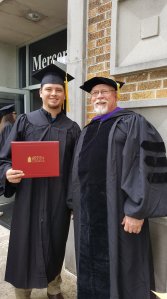 Congratulations! You have a student in high school and you are approaching the end of a journey! You want your students high school years to end well and, in order to do that, you need to be aware of available options. Even if your student does not plan to go to college, that could change, so it is better to be prepared for college, and not go — rather than to not plan for college and then find your student has changed his mind! Do not wait until the spring semester of the senior year to make post-high school plans (especially if your student will attend college). Waiting too long can cause stress, failed plans, and a loss of scholarship offers.
 having your students participate in opportunities that will help them figure out if they, in fact, love a particular interest or, as is often the case, are not as enamored once they gain experience. For instance, if your child is interested in journalism, find a journalist that they shadow or intern with in order to see firsthand what all is involved with this career. If your student knows ahead of time (before college) what he wants to do career-wise, it will help you plan the high school years in such a way that they gain experience before heading to college. If your student has no clue, then taking career assessment tests may be helpful. The Career Services director at Bryan recently conducted a workshop on how to help students discover their interests. A summary of his workshop is found
  than others. Ask for referrals from your friends. When my daughter wanted to gain experience as a videographer I asked our homeschool support group for suggestions and my daughter ended up with two internships, both of which provided invaluable experience in her field. To read more about the varied paths my nine children have taken since high school, go
  Step four involves narrowing down your college choices to 2 or 3 schools. Look for colleges that have majors that interest your students. Yes, I know, this may change. It often does, but start out with current interests. Personally, it is important to my husband and me that our children attend a college that teaches classes from a biblical worldview when possible. For this reason several of our students attended Bryan College (which happens to be where I am the Homeschool Specialist). Of course it would make sense that I highly recommend Bryan College if we have the major your student needs. Begin your search by looking on-line and by asking for referrals from friends. Visit the colleges of choice in person when possible. Most colleges have specific visit days, but many encourage you to visit at any time that is convenient to you. Visiting while classes are in session is the best time to visit because if your students are allowed to sit in on classes, they will gain a first-hand experience. If you are going to be in the area of a college of interest at a time when classes are not in session, it is still worth scheduling a visit so that you can tour the campus and talk to admissions and financial aid counselors. If your student is a senior then check with the colleges of interest to see if they offer special scholarship events for seniors in high school. Bryan College hosts two scholarship events each year, one per semester. These are for seniors who have been accepted to Bryan College. The events are free and are by invitation according to college exam test scores. Each student attending receives an additional scholarship between $200 and $2,000 based on an academic interview. Students can also participate in an essay contest and one winner receives four years tuition! Additional scholarships are offered for music, theater, martial arts and more. You are not limited to how many colleges your student can apply to and, in fact, it makes sense to apply to your top 2 or 3 choices so that you can better compare apples with apples once the financial packages are awarded. There are times throughout the year when application fees are waived (applying to multiple colleges can get costly) so check with the colleges of interest about this. Colleges often offer incentives for applying (or depositing) that reward the student with free products such as t-shirts, mugs, etc. Plan to attend college fairs that are within driving distance to your home. Do some research to find out about virtual college fairs as they are gaining in popularity. Ken Ham, with Answers in Genesis, has a free college fair every November and each high school student receives a free ticket to the Creation Museum and a chance to win a $500 scholarship. The FPEA, in Florida, hosts a homeschool college fair in November. Many homeschool curriculum fairs include vendors in the exhibit hall who represent colleges. HEAV has a separate college vending area at their annual conference in Richmond, VA, as does the NCHE conference that takes place in Winston-Salem, NC. One more word of advice, find out if a college you are looking at offers something unique to that college. Students who attend Bryan College after high school and graduate with a 3.5 GPA can then earn their Master’s degree tuition
  there are multiple scholarships and grants that can be awarded or earned. Dual enrolling while in high school is one of the best ways to save money and cut costs. In some states dual enrollment is totally free, but be careful because dual enrollment is not without dangers. I wrote about that
  of students. Now there is a third option, the
 After homeschooling my nine children for more than 32 years, I am finally finished! One of my regrets is not acknowledging the importance of college entrance exams and/or CLEP and AP credit for those heading to college. For years I was convinced that:
 There are now 3 college entrance exams: the
  When should students begin testing? That depends on the student and on the direction your student is headed. Many students begin taking practice tests as early as 8th or 9th grade. Because the tests are not inexpensive ($49+) most parents wait until the junior year to begin taking official tests. Some schools require a college exam test score for dual enrollment purposes. At Bryan College a student can begin dual enrolling after the sophomore year without a test score (transcript required showing 3.0 GPA or higher), unless they are taking a math class in which case the student would have to provide a college exam math score of ACT 22, SAT 540, or CLT 22.
 Homeschooled Students for Bryan College